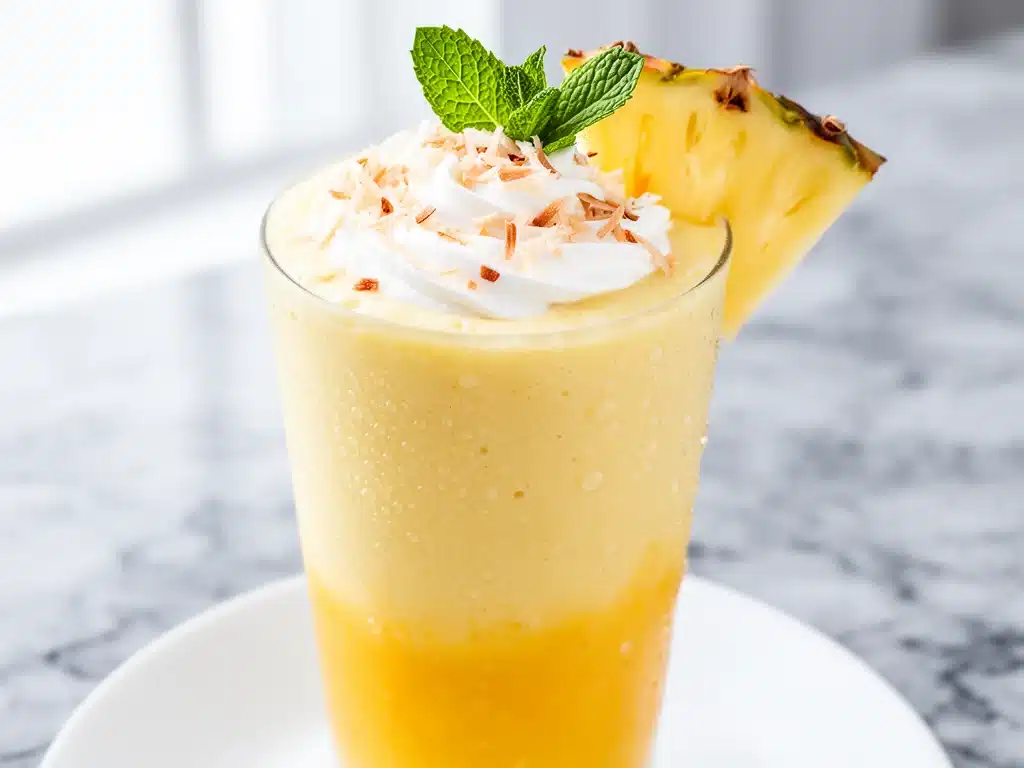
It was 87 degrees in July, my coffee was getting cold, and I was staring into the abyss of my refrigerator, wondering if I could survive another day of eating leftovers for breakfast. I wasn’t hungry for eggs. I wasn’t hungry for toast. I just wanted something cold, sweet, and somehow still healthy enough that I wouldn’t feel guilty about drinking it at 7:30 AM.
I dug to the back of the freezer and found two sad, frozen mango chunks and a half-pineapple that had been lurking there since last Tuesday. I also had a carton of coconut milk that was definitely past its prime but still good. I tossed them in the blender with some ice, a handful of spinach (because I’m trying to be better), and blended it all until it turned into this thick, neon-yellow sludge.
I took one sip. And then another. And then I finished the whole thing standing over the sink.
It was creamy. It was sweet. It tasted like a vacation I couldn’t afford. That was six months ago, and I’ve made this creamy mango pineapple tropical smoothie at least twice a week since. It’s become my go-to when I’m rushing out the door, when I need a pick-me-up in the afternoon slump, or when I just want to pretend I’m on a beach somewhere instead of stuck in traffic.
I’ve tweaked this recipe more times than I can count. I’ve tried almond milk (too thin). I’ve tried yogurt (too tart). I’ve tried adding protein powder (made it chalky). But this specific combination? This is the sweet spot. It’s the version that makes my kids ask for seconds, the version that feels indulgent but is actually packed with vitamins, and the version that takes exactly five minutes from start to sip.
If you’re tired of watery, icy smoothies that separate before you finish them, stick with me. I’m going to show you exactly how to get that restaurant-quality texture at home. No fancy equipment needed. Just fruit, a blender, and a little bit of trust in the process.
Why You’ll Love This Tropical Smoothie
Look, I’ve made hundreds of smoothies in my life. Some are great. Some are… okay. But this creamy mango pineapple tropical smoothie is in a league of its own. Here’s why it keeps coming back into my blender:
- It’s Actually Creamy (Without the Dairy) — Most fruit smoothies taste like flavored ice water. Not this one. The secret is canned coconut milk and frozen banana. It gives you that rich, velvety mouthfeel that usually comes from heavy cream or ice cream, but it’s 100% plant-based and light enough for a morning meal.
- Five Minutes Flat — I’m serious. Prep time is two minutes. Blend time is three. I make this on days when I’m running late for work, on days when I’m too tired to cook, and on lazy Sundays when I’m still in my pajamas. It’s the ultimate low-effort, high-reward breakfast.
- Sweetness Without the Sugar Crash — Because we’re using ripe mango and pineapple, you don’t need to add any honey, maple syrup, or refined sugar. The fruit provides all the sweetness you need, and the fiber keeps your blood sugar stable. No 10 AM crash here.
- It Masks the Greens (If You’re Into That) — I add spinach to mine. You can’t taste it. I promise. The tropical flavors are so strong and sweet that they completely overpower the earthiness of the greens. It’s my hack for sneaking nutrients into my diet without feeling like I’m eating a salad.
- Perfect for Meal Prep — I often make extra and freeze it in jars for busy mornings. It thaws quickly and blends up fresh again. It’s basically my make-ahead breakfast muffin cups but in liquid form. If you like prepping your food, you’ll love how easy this is to scale up.
This isn’t just a drink. It’s a mood booster. It’s bright, it’s sunny, and it tastes like happiness in a glass. Once you try this version, you’ll probably find yourself making it on repeat, just like I do.
Ingredients You’ll Need
Here’s the best part: you probably already have half of this in your fridge or freezer. I’m not asking you to buy exotic ingredients from a specialty store. This is accessible, affordable, and easy to find. Let’s break down what you need and why each piece matters.
For the Creamy Base
Canned coconut milk (1 can / 400ml) — This is non-negotiable for the texture. Do not use the carton kind labeled “light” or “beverage.” You need the full-fat, canned version found in the Asian food aisle. The thick cream from the top of the can is what makes it rich. If you don’t like coconut flavor, use full-fat plain Greek yogurt or silken tofu, but the texture will be different. I swear by the coconut milk.
Frozen mango chunks (1 ½ cups / 225g) — Fresh mango is delicious, but for smoothies, frozen is king. Frozen fruit gives you that thick, slushy consistency without watering down your drink with ice. I buy frozen mango in bulk bags because they’re cheaper and always pre-cut. If you only have fresh mango, peel, cube, and freeze it for at least 4 hours beforehand.
Frozen pineapple chunks (1 cup / 150g) — Pineapple adds that bright, tangy sweetness that cuts through the richness of the coconut. Again, frozen works best. If you’re using fresh pineapple, remember to freeze it first, or your smoothie will be watery. You can use canned pineapple, but drain it well and freeze it for an hour first to remove excess syrup.
Frozen banana (1 medium / about 100g) — This is the hidden ingredient for creaminess. Bananas add body and a natural sweetness that balances the tartness of the pineapple. Use a banana that is spotted and brown—those are the sweetest. Slice it before freezing. If you’re avoiding bananas, use half an avocado, but the flavor profile will change.
For the Flavor Boost
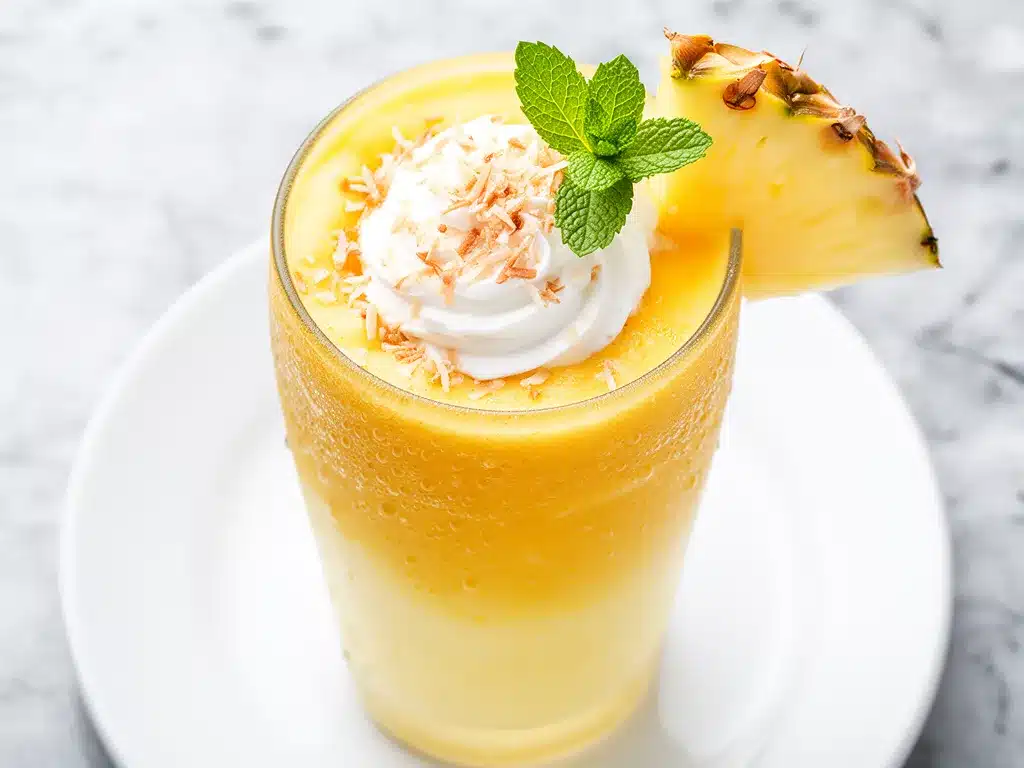
Fresh spinach (1 big handful / about 30g) — I know, I know. You’re skeptical. But trust me. When blended with mango and pineapple, the spinach disappears completely. It adds iron, vitamin K, and a pop of green without altering the taste. If you hate the idea of greens, skip it. The smoothie will still be amazing, just less nutritious.
Lemon juice (1 teaspoon / 5ml) — Just a splash. This brightens up the flavors and makes the tropical notes pop. It’s a little secret that professional chefs use in fruit desserts. You won’t taste lemon, but you’ll notice the difference.
Ice (½ cup / optional) — Only add ice if your frozen fruit isn’t frozen solid enough. If you’re using properly frozen mango and pineapple, you probably don’t need any ice. Ice dilutes flavor, so we want to avoid it if possible.
Optional Add-Ins
Chia seeds (1 tablespoon) — For extra fiber and omega-3s. They add a slight crunch if you don’t blend long enough, but they mostly just disappear into the creaminess.
Protein powder (1 scoop) — If you’re using this as a post-workout meal, a vanilla or unflavored protein powder works great. It might make the texture slightly thicker, so you may need a splash more coconut milk.
Honey or maple syrup (1 teaspoon) — Only add this if your fruit isn’t ripe enough. Taste the fruit first. If it’s sweet, you don’t need it. I rarely add extra sweetener.
Equipment Needed
You don’t need a fancy, $300 blender to make this work. I’ve made this with cheap blenders, high-powered Vitamixes, and even hand blenders (though the hand blender takes longer and leaves chunks). Here’s what I actually use:
High-speed blender — I use a Ninja blender for this. It crushes frozen fruit like butter. If you have a Vitamix or Blendtec, you’re in luck. If you have a weaker blender, you might need to let the frozen fruit thaw for 10 minutes before blending, or add a little liquid first to help it get moving.
Measuring cups — Standard dry and liquid measuring cups work fine. I eyeball it most of the time, but if you’re new to this, measure to get the ratios right.
Knife and cutting board — For slicing the banana and lemon. If you’re using frozen fruit, you don’t need to prep much. Just grab and toss.
Spatula — A silicone spatula is helpful for scraping down the sides of the blender jar. Frozen fruit sticks to the sides, and you want to get it all in.
Glass or mason jar — For serving. I love drinking this out of a mason jar with a straw. It feels more like a treat than a chug from a plastic cup.
Freezer bags — If you want to prep this ahead of time, these are essential. I’ll talk more about that later.
How to Make It: Step-by-Step
Alright, let’s make this! It’s incredibly simple, but there are a few tricks to getting that perfect, thick consistency. I’m walking you through exactly how I do it, including the little mistakes I’ve made so you don’t have to.
Step 1: Prep Your Fruit (2 minutes)
If you’re using fresh fruit, peel and cube the mango and pineapple. Slice the banana. Place everything on a baking sheet and freeze for at least 4 hours, preferably overnight. If you’re using frozen fruit straight from the bag, skip this step. Just make sure the bags are sealed tight so they don’t get freezer burn.
Step 2: Add Liquid First (1 minute)
This is a pro tip for blenders of all levels. Add the coconut milk to the blender jar first. This helps the blades spin freely and prevents the frozen fruit from getting stuck at the bottom. If you have a high-powered blender, order doesn’t matter as much, but for safety and efficiency, liquid first is always a good idea.
Step 3: Add Frozen Fruit and Greens (1 minute)
Toss in the frozen mango, pineapple, banana, and spinach. If you’re adding chia seeds or protein powder, add them now. The spinach should go in last so it doesn’t get lost in the liquid. If you’re using lemon juice, squeeze it in now.
Step 4: Blend Until Smooth (1-2 minutes)
Start your blender on the lowest setting. Let it chop the fruit for a few seconds. Then, gradually increase the speed to high. Blend for 45-60 seconds. You’re looking for a completely smooth, creamy texture with no chunks of fruit visible. If your blender is struggling, stop it, use a spatula to push the fruit down toward the blades, and try again. Do not add more liquid unless it’s completely stuck—adding liquid makes it thin.
Step 5: Taste and Adjust (1 minute)
Stop the blender and taste the smoothie. Is it too thick? Add a splash more coconut milk or water. Is it too thin? Add a few more frozen mango chunks or a handful of ice. Is it not sweet enough? Add a teaspoon of honey or maple syrup. Blend for another 10 seconds to mix it in.
Step 6: Serve Immediately
Pour it into a glass. This smoothie separates quickly, so drink it right away. If you’re serving it to kids, add a fun straw and maybe a little garnish like a mint leaf or a slice of lime. It makes it feel special.
Total time is about 5 minutes. That’s it. You’re done.
Expert Tips & Tricks
Here’s everything I’ve learned from making this dozens of times. These tips will save you from my mistakes.
The Freeze is Key
The number one mistake people make is using fresh fruit. It results in a watery, runny smoothie. You need frozen fruit for that thick, milkshake-like texture. If you don’t have frozen fruit, freeze your own. It takes effort, but it’s worth it.
Don’t Skimp on the Coconut Milk
I know, it’s high in calories. But it’s the fat content that makes this smoothie satisfying. If you use low-fat or light coconut milk, it will taste thin and unsatisfying. You’ll be hungry an hour later. Trust the fat. It keeps you full.
Spinach is Your Friend
I get it. You don’t want to taste greens. But the tropical flavors are so strong that the spinach is undetectable. It’s a great way to add nutrients without changing the taste. If you’re sensitive to the taste of cooked spinach, raw spinach in a smoothie is even milder.
Blend Order Matters
If you have a weaker blender, add the liquid first, then the soft ingredients, then the frozen fruit on top. This creates a vortex that pulls everything down. If you have a Vitamix, you can throw it all in and not worry.
Customize Your Sweetness
Taste your fruit before you blend. If the mango is super sweet, you don’t need extra sugar. If it’s tart, add a little honey. It’s better to add sweetener gradually than to make it too sweet and have to fix it.
Make it a Meal
If you’re using this as a breakfast replacement, add a scoop of protein powder or a tablespoon of nut butter. It makes it more filling and keeps you satisfied until lunch. I often add a spoonful of peanut butter when I need extra staying power.
Variations & Substitutions
Once you’ve nailed the basic version, here’s how you can mix it up. I’ve tried all of these, and they’re all delicious.
Tropical Twist
Add a tablespoon of lime juice and a sprig of fresh cilantro. It sounds weird, but it tastes like a margarita. Great for summer.
Berry Blast
Swap the pineapple for frozen strawberries or mixed berries. It changes the color to pink and adds a different tartness. Still creamy, just berry-flavored.
Green Machine
Double the spinach and add a kiwi. It’s even greener and more nutritious. The kiwi adds enzymes that help with digestion.
Protein Power
Add one scoop of vanilla protein powder and a tablespoon of chia seeds. Perfect for post-workout recovery. It makes the smoothie thicker and more filling.
Dairy-Free
This recipe is already dairy-free, but if you want to avoid coconut, use oat milk and silken tofu instead of coconut milk. The texture will be slightly less rich, but still creamy.
Gluten-Free
This recipe is naturally gluten-free. Just make sure your protein powder and any add-ins are certified gluten-free.
Serving & Storage
How to Serve:
Drink it immediately. This smoothie is best fresh. It’s thick and cold and perfect for a morning start. I like to serve it in a tall glass with a straw. It feels like a treat.
Side Dishes:
This smoothie is often enough for breakfast, but if you’re hungry, pair it with a piece of toast or a handful of nuts. I sometimes have it with a side of breakfast muffin cups if I’m meal prepping.
Storage Instructions:
This smoothie does not store well. It separates and becomes watery within an hour. If you need to make it ahead, freeze the ingredients in bags and blend it fresh in the morning. I do this all the time. It’s the best way to ensure freshness.
Freezing:
You can freeze the blended smoothie in an airtight container for up to a month, but the texture will change. It will be icy and separated when thawed. I don’t recommend it. Fresh is best.
Pro Tip:
If you’re taking this to work, use a mason jar with a lid. Shake it well before drinking to recombine any separated liquid. It’s not ideal, but it works in a pinch.
Nutrition Information
I’m not a nutritionist, but here’s the breakdown if you’re tracking. This is per serving (1 smoothie).
Per Serving:
– Calories: 350
– Protein: 5g
– Carbs: 55g
– Fiber: 8g
– Sugar: 40g (natural fruit sugar)
– Fat: 15g
– Saturated Fat: 12g
– Cholesterol: 0mg
– Sodium: 15mg
– Vitamin C: 100% of daily value
What’s Good:
– High in vitamin C from the pineapple and mango.
– Good source of fiber from the fruit and spinach.
– Healthy fats from the coconut milk.
– No added sugar.
What to Know:
– High in natural sugars, so if you’re watching your sugar intake, be mindful of portion size.
– High in saturated fat from the coconut milk, but it’s plant-based and generally considered healthier than animal fats in moderation.
My Take:
Look, this is a sweet drink. It’s not a diet food. But it’s way better than a candy bar or a sugary latte. It’s real fruit, real nutrients, and it makes me feel good. When I want to make it lighter, I use less coconut milk and more spinach. But usually? I just enjoy it.
Final Thoughts
So that’s my go-to creamy mango pineapple tropical smoothie! I’ve probably talked your ear off at this point, but when you make a recipe this often, you have a lot to say about it. This has saved my mornings more times than I can count. It’s my answer to “what’s for breakfast” when I’m tired, don’t want to cook, and still want something that tastes really good.
Make it yours! Try different add-ins, swap in your favorite fruits, adjust the sweetness to your liking. The best recipes are the ones you adapt to your family’s tastes. If you make this, drop a comment and let me know what you think! I love hearing how recipes turn out in your kitchen. And if something doesn’t work, tell me that too—I’m here to help troubleshoot.
Happy blending! And I hope your kitchen smells half as good as mine does right now.
Frequently Asked Questions
Can I use fresh fruit instead of frozen?
You can, but the smoothie will be much thinner and less creamy. If you use fresh fruit, you’ll need to add a lot of ice, which can water down the flavor. For the best texture, frozen fruit is key. If you must use fresh, freeze it for a few hours before blending.
Why did my smoothie turn out watery?
Usually means you used fresh fruit instead of frozen, or you added too much liquid. Start with less liquid and add more only if needed. The frozen fruit should provide enough thickness. If it’s already watery, add more frozen fruit or ice and blend again.
Can I make this ahead for a busy morning?
I don’t recommend blending it ahead of time because it separates. Instead, prep the ingredients the night before. Put the frozen fruit, spinach, and other ingredients in a freezer bag or container. In the morning, just dump it in the blender with the coconut milk and blend. It’s just as easy.
Why did my smoothie get chunky?
The blender wasn’t powerful enough, or you didn’t blend long enough. If you have a weaker blender, add the liquid first and blend on low before increasing to high. You may need to stop and scrape down the sides. For a smoother texture, blend for at least 60 seconds.
Can I use almond milk instead of coconut milk?
You can, but it won’t be as creamy. Almond milk is much thinner. If you use almond milk, add a banana or some avocado to help with the creaminess. It will still be delicious, just lighter in texture.
How do I store leftovers?
As I mentioned, this smoothie doesn’t store well. It’s best fresh. If you have leftovers, store them in an airtight container in the fridge for up to 24 hours. Shake well before drinking. The texture will change, but it’s still safe to eat.
Can I double this recipe?
Absolutely! Double all the ingredients and use a larger blender jar. The blending time stays the same. I do this when I’m meal-prepping for the week or feeding a crowd. Just make sure your blender is big enough to handle the volume.
Pin This Recipe!
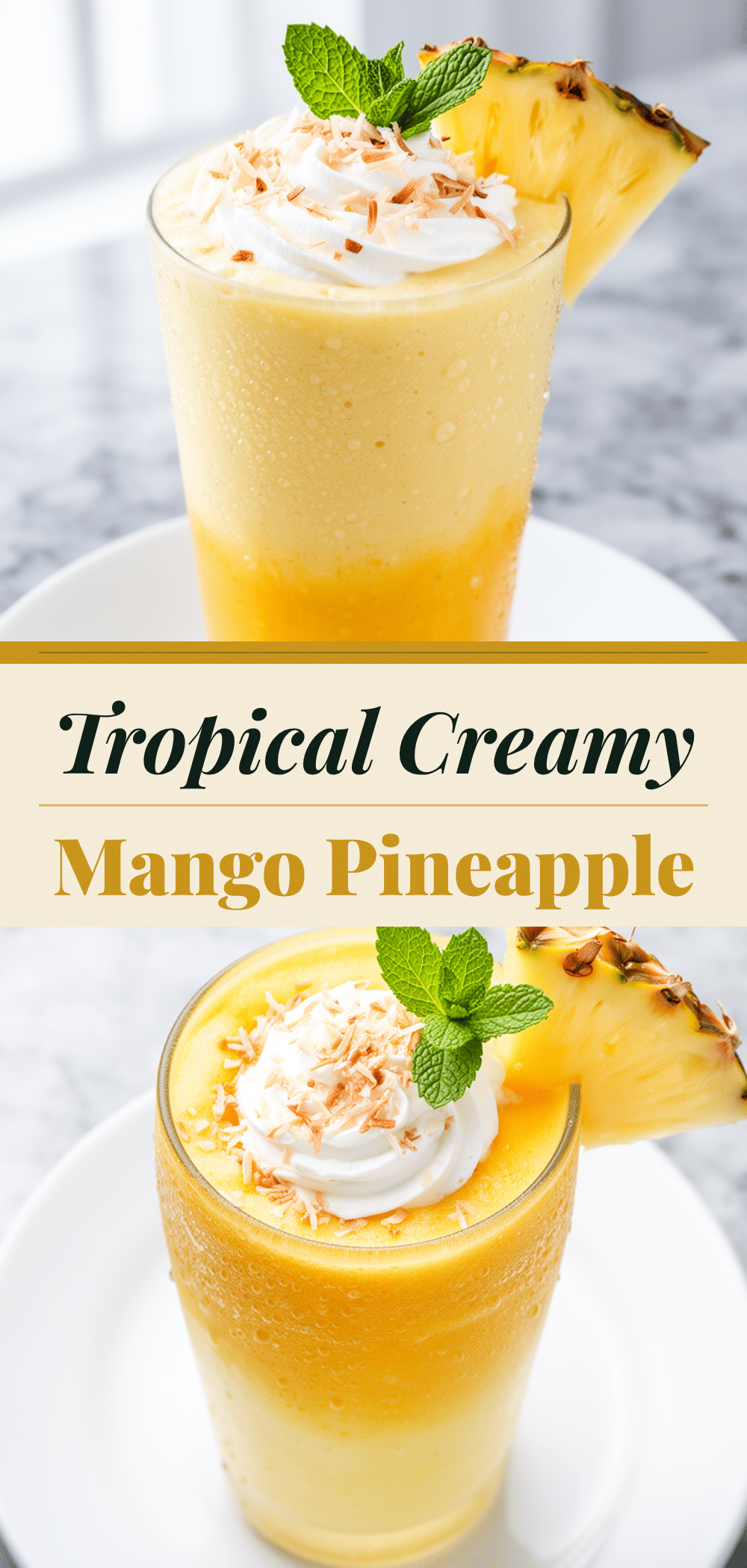

Creamy Mango Pineapple Tropical Smoothie
- Total Time: 5 minutes
- Yield: 1 serving 1x
Description
A thick, creamy, and sweet tropical smoothie made with frozen mango, pineapple, and coconut milk. This dairy-free, gluten-free drink is ready in just 5 minutes and provides a healthy, energizing breakfast or snack.
Ingredients
- 1 can (400ml) full-fat canned coconut milk
- 1 ½ cups (225g) frozen mango chunks
- 1 cup (150g) frozen pineapple chunks
- 1 medium frozen banana (about 100g)
- 1 big handful fresh spinach (about 30g)
- 1 teaspoon lemon juice
- ½ cup ice (optional, if fruit isn’t frozen solid)
- 1 tablespoon chia seeds (optional)
- 1 scoop protein powder (optional)
- 1 teaspoon honey or maple syrup (optional, if fruit isn’t sweet enough)
Instructions
- Prep the fruit: If using fresh fruit, peel and cube the mango and pineapple, slice the banana, and freeze for at least 4 hours or overnight. If using frozen fruit, ensure bags are sealed tight.
- Add liquid first: Pour the canned coconut milk into the blender jar to help the blades spin freely.
- Add solids: Toss in the frozen mango, pineapple, banana, and spinach. Add chia seeds, protein powder, and lemon juice now.
- Blend: Start the blender on the lowest setting, then gradually increase to high. Blend for 45-60 seconds until completely smooth and creamy.
- Adjust consistency: If too thick, add a splash of coconut milk or water. If too thin, add more frozen fruit or ice. Blend for another 10 seconds if adjustments are made.
- Serve immediately: Pour into a glass or mason jar and drink right away for the best texture and flavor.
Notes
For the best texture, use frozen fruit rather than fresh fruit to avoid a watery consistency. Full-fat canned coconut milk is essential for creaminess; do not use beverage-style cartons. The spinach is undetectable in taste but adds nutrients. This smoothie separates quickly, so it is best consumed immediately. If meal prepping, freeze the solid ingredients in bags and blend fresh in the morning.
- Prep Time: 2 minutes
- Cook Time: 3 minutes
- Category: Breakfast
- Cuisine: Tropical
Nutrition
- Serving Size: 1 large glass
- Calories: 350
- Sugar: 40
- Sodium: 15
- Fat: 15
- Saturated Fat: 12
- Carbohydrates: 55
- Fiber: 8
- Protein: 5
Keywords: smoothie, mango, pineapple, tropical, healthy breakfast, dairy-free, gluten-free, vegan, quick recipe, 5-minute recipe


