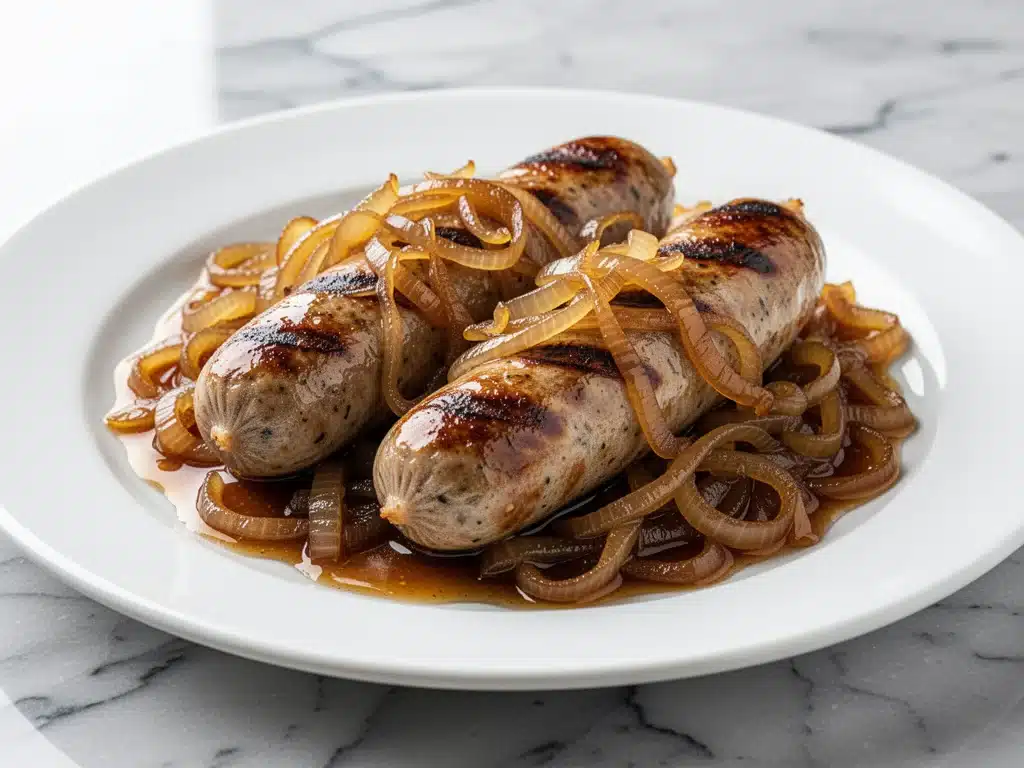
I still remember the first time I tried to make bratwurst for a crowd. It was late September, the air was already crisp, and my backyard was packed with friends who had traveled from out of town specifically to watch the football game. I had planned to grill them on the barbecue, just like everyone else. I thought I had it all figured out. Then, about twenty minutes into the cook, I realized I was sweating through my shirt while the smoke billowed up, the brats were drying out on the grate, and I had no idea how to make a decent onion condiment that didn’t taste like raw, sharp onions.
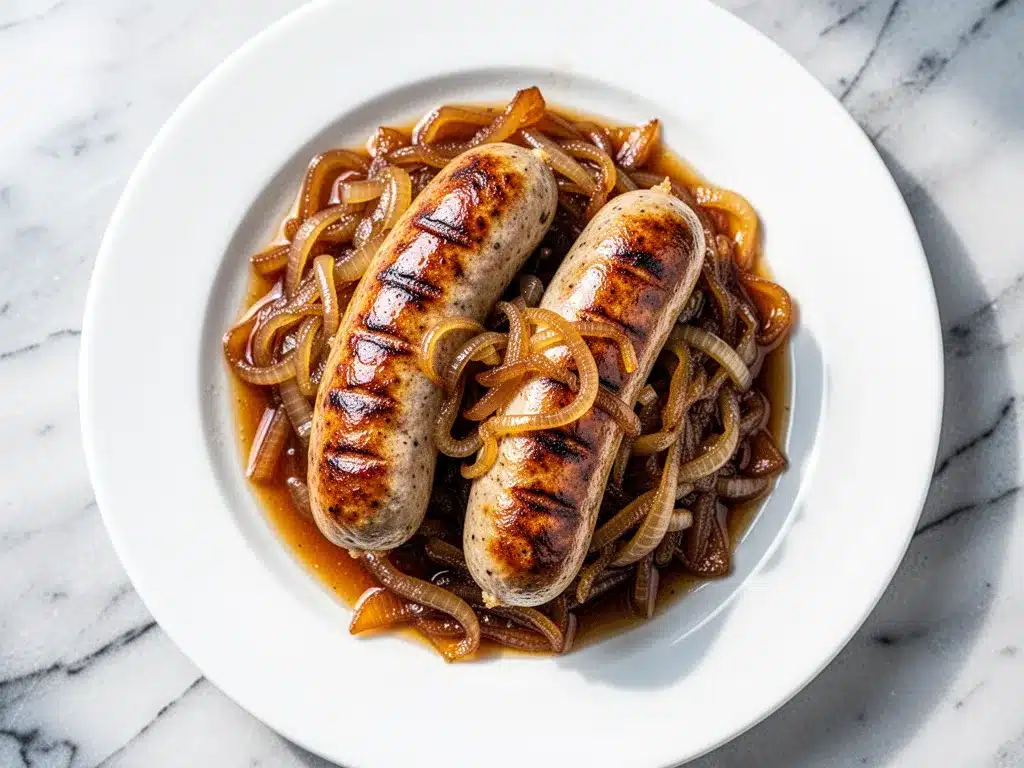
That was the year I discovered the braising method. It changed everything. Instead of wrestling with a grill, I ended up making my Oktoberfest Beer Braised Bratwurst in a Dutch oven on the stove. The result? Juicy, plump sausages that had absorbed the deep, malty flavors of the beer and onions, served in a rich, savory broth. It was easier, it kept the smoke outside where it belonged, and my friends actually complimented me on the “restaurant-quality” flavor. Since then, this has been the centerpiece of every fall gathering, tailgate, and lazy Sunday dinner.
If you’ve ever felt intimidated by sausage cooking or just want a meal that feels festive without requiring hours of standing over a fire, you need to try this. I’ve tested this recipe at least a dozen times—using different beers, different onions, and even different pots—until I found the perfect balance. It’s not just about cooking sausages; it’s about creating an experience. The smell alone will have your neighbors wondering what’s cooking. And trust me, once you taste a brat that’s been slow-braised in beer and caramelized onions, you’ll never go back to plain grilled ones again.
Why You’ll Love This Oktoberfest Recipe
There are a million ways to cook a sausage, but this method stands out for reasons that go way beyond just taste. Here’s why this Oktoberfest Beer Braised Bratwurst has earned a permanent spot in my fall recipe rotation:
- Zero Grill Stress — Seriously. No flare-ups, no burnt edges, no standing in the cold or heat for forty-five minutes. You do this in one pot, indoors or out. I made this last week while helping my daughter with her math homework. That’s the level of easy we’re talking about.
- Maximum Flavor Infusion — Grilling sears the outside, but braising lets the flavor penetrate the meat. The beer breaks down the fibers slightly, making the brats incredibly tender, while the onions turn into a sweet, jammy condiment that melts in your mouth.
- Build-Your-Own Atmosphere — This isn’t just dinner; it’s an event. Set up a toppings bar with mustard, sauerkraut, and crusty bread. It’s interactive, fun, and perfect for parties. It’s the culinary equivalent of a hug.
- Uses Up Leftover Beer — Open a lager for the braising liquid and drink the rest. It’s the most efficient use of a cold beer I know. Plus, cooking with alcohol adds depth that water or broth just can’t match.
- Make-Ahead Friendly — You can braise the brats up to two days in advance. In fact, I often find they taste even better the next day after the flavors have had time to meld. Just reheat gently in the oven or microwave.
This is my go-to when I want to impress guests without spending the entire day in the kitchen. It’s hearty, it’s comforting, and it tastes like autumn in a bite.
Ingredients You’ll Need
Here’s the best part: you probably have most of this already in your pantry or freezer. The beauty of this recipe is that it relies on a few high-quality components rather than a complicated list of spices. I’m particular about three things here, and I’ll tell you exactly why.
For the Braise
Pork Bratwursts (6-8 links, about 2 lbs / 900g) — This is the star. Don’t buy the pre-cooked ones if you can avoid it. Raw, fresh bratwurst from your butcher or a good grocery store has a better texture and more flavor. Look for ones with a high meat-to-fat ratio. If you prefer chicken or turkey brats, this works too, though the flavor profile will be lighter.
Beer (1 bottle or can, 12 oz / 355ml) — You need a lager or a pilsner. A German-style pilsner is traditional, but an American lager like Budweiser, Coors, or Miller works perfectly. Avoid dark beers like stouts or porters; they can make the dish too bitter and muddy the flavor. The alcohol cooks off, leaving behind a malty sweetness.
Yellow Onions (3 large, thinly sliced / about 600g) — Yes, three. You want a generous amount of onion. Slice them paper-thin. These will caramelize in the beer and become a sweet, savory topping. Don’t skip this step; the onions are half the meal.
Chicken Broth (1 cup / 240ml) — I use low-sodium so I can control the saltiness. Vegetable broth works for a vegetarian version. This adds body to the braising liquid and ensures the brats don’t dry out.
Butter (2 tablespoons) — For sautéing the onions. It adds richness and helps them brown. Unsalted is best so you can control the salt.
For the Flavor Base
Garlic (4 cloves, minced / about 1 tablespoon) — Fresh only. Jarred garlic has a sulfurous taste that doesn’t belong in a delicate braise. Mince it finely so it distributes evenly.
Caraway Seeds (1 teaspoon) — This is the secret weapon. Caraway seeds are traditional in German sausage and onion dishes. They add that distinct, earthy, slightly peppery note that screams “Oktoberfest.” If you don’t have them, you can skip them, but I highly recommend picking them up.
Dijon Mustard (2 tablespoons) — Stirred into the braising liquid. It adds a tangy kick that cuts through the richness of the sausage and beer. It’s not meant to taste like mustard; it’s meant to add complexity.
Bay Leaves (2 dried leaves) — They infuse a subtle herbal aroma. Remove them before serving.
For Serving
Brat Buns (6-8 buns) — Look for soft, squishy brioche buns or traditional German pretzel rolls. Avoid hard rolls; they’ll fall apart under the weight of the juicy brat.
Sauerkraut (1 cup, drained and rinsed) — The acidity and crunch of sauerkraut are essential to balance the heavy, savory brat. I rinse it to remove excess brine, which can be too salty.
Whole Grain Mustard (for serving) — Chunky mustard adds texture and a sharp bite.
Yellow Mustard (for serving) — The classic condiment. Some people prefer it, some don’t. Have both ready.
Equipment Needed
You don’t need fancy equipment for this. Here’s what I actually use:
Large Dutch Oven or Heavy-Bottomed Pot — I use my 6-quart enameled cast iron Dutch oven. It holds heat incredibly well, which is crucial for even braising. A heavy stainless steel pot works too. Avoid thin aluminum pots; they’ll burn the onions.
Sharp Chef’s Knife — For slicing the onions thinly. A dull knife will crush the onions and make them mushy instead of silky.
Wooden Spoon — For stirring the onions and deglazing. It won’t scratch your pot.
Tongs — For turning the brats. Metal tongs are sturdy and easy to clean.
Measuring Cups and Spoons — Standard stuff. Dollar store versions work fine.
Plate or Bowl — To hold the brats while you finish the onions.
How to Make It: Step-by-Step
Alright, let’s make this! I’m walking you through exactly how I do it, including the little tricks I’ve picked up over the years. This process is forgiving, so don’t stress if you’re a beginner.
Step 1: Prep Your Ingredients (10 minutes)
Before you turn on the stove, get everything ready. Slice the onions paper-thin. Mince the garlic. Measure out the beer, broth, and mustard. It seems fussy, but it makes the actual cooking way less stressful. Once you start cooking, things move fast, and you don’t want to be hunting for garlic while your onions are burning.
Step 2: Sear the Brats (5 minutes)
Heat your Dutch oven over medium-high heat. Add a tablespoon of oil (if your brats are very lean) or just a splash of water. Place the bratwursts in the pot. You don’t need to crowd them, but you can do this in batches if you have a smaller pot. Sear the brats for 2-3 minutes on each side, just until they have a nice golden-brown crust. This step is about flavor, not cooking them through. Remove the brats from the pot and set them aside on a plate. Don’t wipe out the pot; those brown bits (fond) at the bottom are flavor gold.
Step 3: Caramelize the Onions (15 minutes)
Reduce the heat to medium. Add the butter to the same pot. Add the sliced onions and a pinch of salt. Cook the onions, stirring occasionally, for about 15 minutes. They should turn a deep, golden brown and become very soft. This is the caramelization process. If they start sticking too much, deglaze with a splash of the beer. Don’t rush this step. Good caramelized onions take time, and they are the soul of this dish.
Step 4: Build the Braising Liquid (5 minutes)
Once the onions are golden, add the minced garlic and caraway seeds. Cook for 1 minute, stirring constantly, until fragrant. Be careful not to burn the garlic. Pour in the beer, scraping up all those brown bits from the bottom of the pot. Let the beer simmer for 2 minutes to cook off the harsh alcohol taste. Then, add the chicken broth, Dijon mustard, and bay leaves. Stir to combine.
Step 5: Braise the Brats (25-30 minutes)
Return the seared brats to the pot, nestling them into the onion mixture. The liquid should come about halfway up the sides of the brats. If it doesn’t, add a little more broth. Cover the pot with a tight-fitting lid. Reduce the heat to low-medium low. Let them simmer gently for 25-30 minutes. You want a gentle bubble, not a rolling boil. The brats will cook through and absorb the flavors of the beer and onions.
Step 6: Finish and Serve (5 minutes)
Remove the lid. Check the internal temperature of a brat with a meat thermometer; it should reach 160°F (71°C). If they’re not done, simmer uncovered for a few more minutes. Remove the brats and bay leaves. If the liquid is too thin, simmer it uncovered for 5-10 minutes to reduce it into a rich sauce. Toast your buns in the toaster oven or in the sauce for a minute. Assemble your brats with the caramelized onions, sauerkraut, and mustards. Serve immediately.
Total Time: About 50 minutes (10 minutes prep, 40 minutes cooking)
Expert Tips & Tricks
Here’s everything I’ve learned from making this dozens of times. These tips will save you from my mistakes.
Don’t Boil the Beer — If you let the beer boil vigorously, it can become bitter. Keep the heat low and gentle. You want to braise, not boil.
The Onion Test — You’ll know the onions are ready when they are translucent, deeply golden, and easily mashed with a spoon. If they’re still white and crunchy, keep cooking.
Use a Good Beer — You’re drinking the beer, so you should cook with it. If you wouldn’t drink it cold, don’t cook with it. A cheap, watery lager will result in a watery, bland sauce.
Saute the Sauerkraut — For extra flavor, I sometimes quickly sauté the drained sauerkraut in a separate pan with a little butter and caraway seeds before serving. It takes the “raw” edge off.
Keep Them Warm — If you’re serving a crowd, keep the brats warm in the pot on the lowest setting with the lid on. They will stay juicy for up to an hour.
Common Mistakes
- Brats are dry: You cooked them too hot or for too long. Braising should be gentle. If you overcook them, the casings will burst, and the juices will escape.
- Sauce is too thin: Don’t worry. Just simmer uncovered at the end to reduce it. It will thicken up beautifully.
- Onions are burnt: If the bottom burns, start over. Burnt onions will ruin the entire dish. If they’re just starting to stick, deglaze with beer immediately.
Variations & Substitutions
Once you’ve nailed the basic version, here’s how you can mix it up. I’ve tried all of these.
Vegetarian Option — Use high-quality meatless brats. They tend to be drier, so braise them for less time (20 minutes) and add a little extra butter to the onions. Serve with the same toppings.
Spicy Kick — Add 1 teaspoon of red pepper flakes to the onions, or use spicy Italian sausage instead of mild bratwurst. This pairs wonderfully with the sweet onions.
Apple Cider Twist — Swap half the beer for apple cider. Apple and pork are a classic pairing. Add a slice of fresh apple to the pot while braising for extra fruitiness.
Mustard Power — Swap the Dijon for whole grain mustard for a textural contrast, or add a tablespoon of honey to the braising liquid for a sweeter glaze.
Dietary Modifications
- Gluten-Free: Use gluten-free beer and gluten-free brats. Most traditional brats are gluten-free, but check labels for fillers. Serve on gluten-free buns.
- Dairy-Free: Skip the butter in the onions and use olive oil instead. Most brats and buns contain dairy, so check labels or use dairy-free alternatives.
Serving & Storage
How to Serve: I usually serve this straight from the Dutch oven at the dinner table—it looks rustic and stays warm. But here are other ways I’ve enjoyed it:
Side Dishes:
- German potato salad (warm or cold)
- Roasted Brussels sprouts with bacon
- Simple arugula salad with lemon vinaigrette
- Soft pretzels with cheese dip
Toppings Bar: When I have guests, I put out: whole grain mustard, yellow mustard, sauerkraut, caramelized onions, and crispy fried onions. Everyone customizes their brat.
Storage Instructions:
Refrigerator: Store in an airtight container for up to 3 days. The sauce will thicken in the fridge—totally normal.
Reheating: Best method: Add to a skillet with a splash of water or broth over low heat. Stir until heated through. Microwave works too, but add a splash of liquid first to prevent drying out.
Freezing: This doesn’t freeze well. The brat casings can become rubbery, and the sauce may separate. Make it fresh or store in the fridge for up to 3 days.
Nutrition Information
I’m not a nutritionist, but here’s the breakdown if you’re tracking. This is a hearty meal, so portion control is key.
Per Serving (based on 1 brat with bun and toppings):
- Calories: 650
- Protein: 25g
- Carbs: 45g
- Fiber: 3g
- Sugar: 8g
- Fat: 35g
- Saturated Fat: 12g
- Cholesterol: 70mg
- Sodium: 900mg
What’s Good: Decent protein from the sausage. The onions provide fiber and antioxidants. It’s more filling than it looks.
What to Know: Higher in sodium and saturated fat due to the sausage and cheese. Use low-sodium broth and mustard to reduce sodium. Serve with a large salad to balance the meal.
Final Thoughts
So that’s my go-to Oktoberfest Beer Braised Bratwurst! I’ve probably talked your ear off at this point, but when you make a recipe this often, you have a lot to say about it. This has saved fall gatherings more times than I can count. It’s my answer to “what’s for dinner” when I want something festive, hearty, and comforting without the stress of grilling.
Make it yours! Try different beers, swap in your favorite vegetables, adjust the spices. The best recipes are the ones you adapt to your family’s tastes. If you make this, drop a comment and let me know what you think! I love hearing how recipes turn out in your kitchen. And if something doesn’t work, tell me that too—I’m here to help troubleshoot.
Happy cooking! And I hope your kitchen smells half as good as mine does right now.
Frequently Asked Questions
Q: Can I use any type of beer?
A: I recommend a lager or pilsner. Dark beers like stouts can be too bitter, and IPAs can be too hoppy and clash with the savory flavors. Stick to a crisp, clean beer for the best results.
Q: Can I make this in a slow cooker?
A: Yes! Sear the brats and caramelize the onions on the stove first (this step is crucial for flavor). Then transfer everything to the slow cooker. Cook on low for 4-6 hours. The texture will be slightly different, but it’s a great hands-off option.
Q: Why did my brats burst while cooking?
A: This usually happens if the heat is too high or if you pierce the casings while searing. Keep the braise gentle, and don’t poke the brats. If they burst, the juices escape, and they can dry out. Use a thermometer to ensure you’re not overcooking them.
Q: Can I use pre-cooked brats?
A: You can, but they won’t have the same juicy texture. Pre-cooked brats are already fully cooked, so you just need to warm them through. Reduce the braising time to 15-20 minutes to prevent them from becoming rubbery.
Q: How do I reheat leftovers without them drying out?
A: Add a splash of water or broth to a skillet and reheat gently over low heat. Cover the pan to trap the steam. Avoid the microwave if possible, as it tends to dry out sausages quickly.
Q: What’s the best side dish for this?
A: I love serving this with brown butter honey roasted carrots for a sweet and savory contrast, or a simple green salad to cut through the richness. For a full German meal, try loaded baked potato soup on the side.
Q: Can I double this recipe for a party?
A: Absolutely! Double everything and use your biggest pot. The cooking times stay the same. Just make sure your pot is large enough to hold all the brats in a single layer for even cooking.
Pin This Recipe!
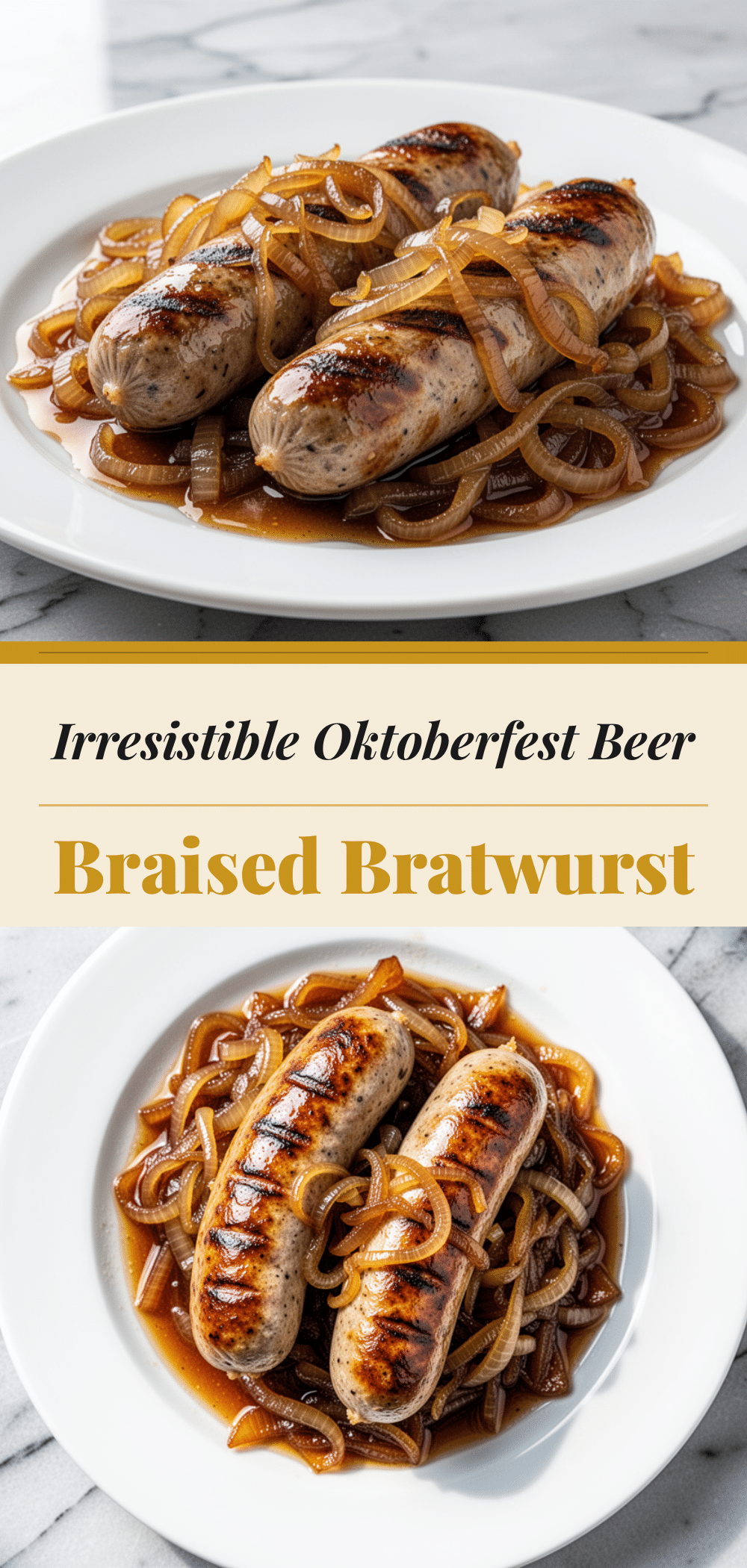
Oktoberfest Beer Braised Bratwurst: Easy Fall Party Recipe
- Total Time: 50 minutes
- Yield: 6 servings 1x
Description
Juicy, plump bratwursts slow-braised in a rich mixture of lager, caramelized onions, and spices. This one-pot method eliminates grill stress while delivering deep, festive flavors perfect for fall gatherings.
Ingredients
- 6–8 raw pork bratwursts (about 2 lbs / 900g)
- 1 bottle or can lager or pilsner beer (12 oz / 355ml)
- 3 large yellow onions, thinly sliced (about 600g)
- 1 cup low-sodium chicken broth (240ml)
- 2 tablespoons unsalted butter
- 4 cloves garlic, minced
- 1 teaspoon caraway seeds
- 2 tablespoons Dijon mustard
- 2 dried bay leaves
- 6–8 soft brat buns (brioche or pretzel rolls)
- 1 cup sauerkraut, drained and rinsed
- Whole grain mustard, for serving
- Yellow mustard, for serving
- Oil or water, for searing (optional)
Instructions
- Prep ingredients: Slice onions paper-thin, mince garlic, and measure beer, broth, and mustard.
- Sear the brats: Heat a Dutch oven over medium-high heat. Add bratwursts and sear for 2-3 minutes per side until golden brown. Remove brats and set aside on a plate.
- Caramelize onions: Reduce heat to medium. Add butter to the pot. Add sliced onions and a pinch of salt. Cook for about 15 minutes, stirring occasionally, until deep golden brown and soft. Deglaze with a splash of beer if sticking occurs.
- Build braising liquid: Add minced garlic and caraway seeds to the onions. Cook for 1 minute until fragrant. Pour in the beer, scraping up brown bits from the bottom. Simmer for 2 minutes. Add chicken broth, Dijon mustard, and bay leaves. Stir to combine.
- Braise the brats: Return seared brats to the pot, nestling them into the onion mixture. Liquid should come halfway up the brats. Cover with a tight-fitting lid. Reduce heat to low-medium low and simmer gently for 25-30 minutes.
- Finish and serve: Remove lid. Check internal temperature (should reach 160°F / 71°C). Remove brats and bay leaves. If sauce is thin, simmer uncovered for 5-10 minutes to reduce. Toast buns. Assemble brats with onions, sauerkraut, and mustards. Serve immediately.
Notes
Do not boil the beer vigorously as it can become bitter. Ensure onions are fully caramelized for the best flavor. This recipe can be made ahead and reheated gently. For a vegetarian version, use meatless brats and vegetable broth. To reduce sodium, use low-sodium broth and mustard.
- Prep Time: 10 minutes
- Cook Time: 40 minutes
- Category: Main Course
- Cuisine: German
Nutrition
- Serving Size: 1 brat with bun and
- Calories: 650
- Sugar: 8
- Sodium: 900
- Fat: 35
- Saturated Fat: 12
- Carbohydrates: 45
- Fiber: 3
- Protein: 25
Keywords: Oktoberfest, beer braised bratwurst, fall recipes, one pot meal, German sausage, easy party food, braised sausages, autumn dinner


