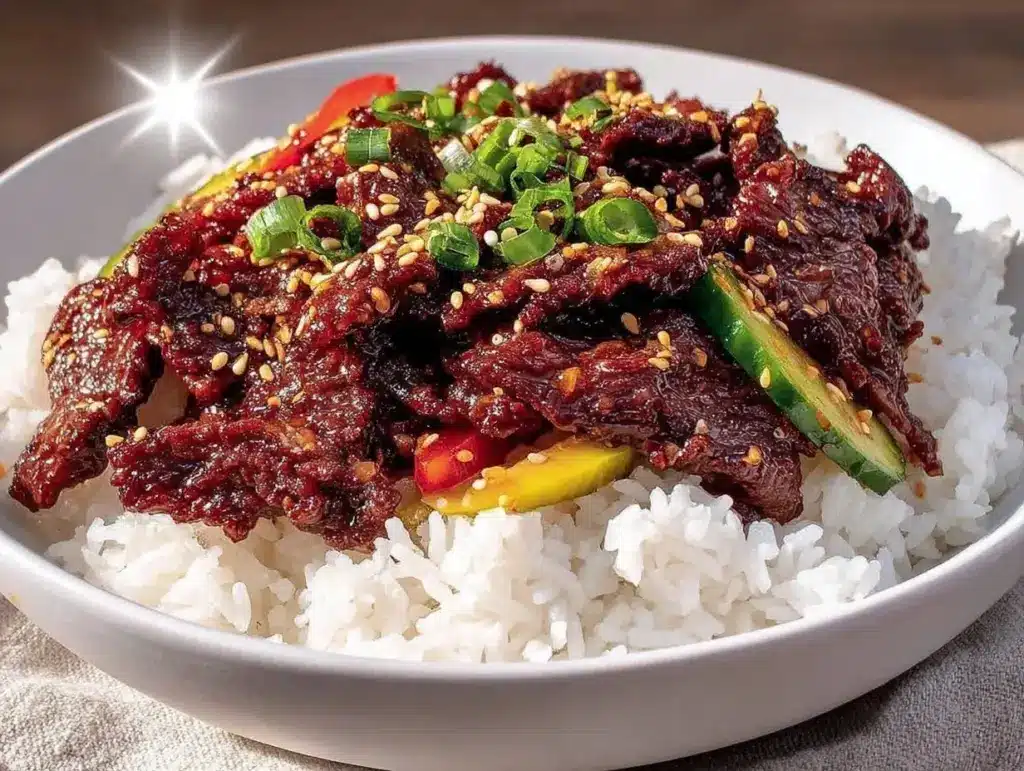
Last Saturday, I was hosting a small dinner party for six friends. You know the type—people who claim they’re “easy to please” but will judge you silently if the food isn’t Instagram-worthy. I had planned a complex roast, but then I looked at my calendar, realized I had exactly 45 minutes before guests arrived, and decided to pivot. I threw together these Korean Beef Bulgogi Rice Bowls. They were vibrant, they were fast, and they were dangerously addictive. By the time we finished eating, my friend Sarah was already asking for the recipe, and my husband had scraped the bottom of his bowl with a spoon (a universal sign of success).
Here’s the thing about this Korean Beef Bulgogi Rice Bowl with Quick Pickled Cucumber: it looks like something you’d order at a high-end gastropub, but it’s actually simpler than making a sandwich. The secret isn’t just the beef—it’s the balance. You’ve got the sweet, savory, umami-rich beef marinating in soy and pear, sitting on top of fluffy rice, and then you cut through all that richness with bright, crunchy, tangy quick-pickled cucumbers. It’s the kind of meal that feels special because it’s colorful and textural, but it’s actually just honest, home-cooked food.
I’ve tested this bowl recipe about a dozen times now. I’ve tried different cuts of beef, I’ve tweaked the marinade sweetness, and I’ve even tried making the pickles ahead of time (spoiler: they’re best when they’ve sat in the fridge for at least an hour). But the core concept remains the same: fast, flavorful, and incredibly satisfying. Whether you’re feeding a hungry family on a Tuesday or trying to impress guests this weekend, this bowl delivers. And honestly? It’s easier than you think.
Why You’ll Love This Korean Beef Bulgogi Rice Bowl
There are about ten reasons I keep making this dish, but here are the big ones that will win you over too.
The Marinade is Liquid Gold — Seriously, the beef goes from good to restaurant-quality in just 20 minutes. I use a mix of soy sauce, brown sugar, sesame oil, and grated Asian pear (or apple if you’re in a pinch). The fruit enzymes tenderize the meat while the sugar caramelizes when it hits the pan. It’s sweet, salty, and deeply savory. I’ve made this marinade for chicken too, but the beef is where it truly shines.
Quick Pickled Cucumbers Are the MVP — You might skip the pickles, but please don’t. They cut through the heavy, rich beef like a knife. I use English cucumbers because they’re less seedy and crunchier. I slice them thin, toss them with rice vinegar, sugar, and a pinch of chili flakes, and let them sit while I cook. By the time dinner is ready, they’ve absorbed all that tangy brine. It’s the perfect contrast to the warm, soft beef.
Stunningly Beautiful — This is a visual winner. The deep mahogany color of the beef against the white rice, topped with vibrant green cucumbers and a sprinkle of toasted sesame seeds? It looks intentional and polished. I served this to my food-snob neighbor last week, and she actually took a photo before she took a bite. It’s that kind of presentation.
Lightning Fast — From start to finish, this takes about 30-40 minutes. The active cooking time is less than 15 minutes because most of the work is just slicing and marinating. I make this on weeknights when I want something better than cereal but don’t have hours to spend in the kitchen. It’s a weeknight dinner win that feels like a weekend treat.
Customizable for Everyone — I’ve served this to picky eaters and adventurous foodies alike. The base is simple rice and beef, but the toppings are up to you. Do you like spicy? Add gochujang. Do you like fresh? Add some shredded carrots or cilantro. It’s a blank canvas for flavor.
This is my go-to when I need dinner to just work. No complicated techniques, no weird ingredients, just reliable, delicious food that makes everyone happy. It’s the kind of meal that leaves you feeling satisfied but not stuffed, and your guests will be asking for seconds.
Ingredients You’ll Need
Here’s the best part: you probably have most of this already. This Korean Beef Bulgogi Rice Bowl with Quick Pickled Cucumber relies on pantry staples and fresh produce that’s easy to find. I’m particular about three ingredients here, and I’ll tell you exactly why.
For the Beef Marinade
Flank steak or skirt steak (1.5 lbs / 680g) — This is non-negotiable. You need a thin, flavorful cut that absorbs marinade well. Flank steak is my favorite because it’s widely available and slices beautifully. Skirt steak works too, but it can be chewier if you don’t slice it against the grain. Avoid ribeye or sirloin here—they’re too fatty and won’t get that nice sear.
Soy sauce (½ cup / 120ml) — I use regular soy sauce, not low-sodium, because the salt content helps with the caramelization. If you’re watching sodium, use low-sodium but add a pinch of extra salt later. I keep Kikkoman or a similar brand in my pantry at all times.
Brown sugar (3 tablespoons / 45g) — Light or dark brown sugar both work. I prefer dark for that deeper molasses flavor, but light is fine if that’s what you have. The sugar is what makes the beef caramelized and sticky.
Sesame oil (2 tablespoons / 30ml) — Use toasted sesame oil. It’s dark and nutty, and it smells incredible. Regular sesame oil is flavorless and won’t give you that authentic taste. If you don’t have it, a little extra soy sauce helps, but it’s not the same.
Asian pear or Bosc pear (1 medium, grated / about ½ cup) — This is the secret tenderizer. The enzymes break down the beef fibers, making it incredibly tender. If you can’t find Asian pears, a regular Bosc or Anjou pear works fine. Grate it finely so it melts into the marinade.
Garlic (6 cloves, minced / about 2 tablespoons) — Yes, six cloves. Don’t skimp. Fresh only—no jarred garlic in this recipe. It adds a sharp bite that balances the sweetness.
Black pepper (1 teaspoon) — Freshly cracked is best. Adds a little heat and depth.
For the Quick Pickled Cucumbers
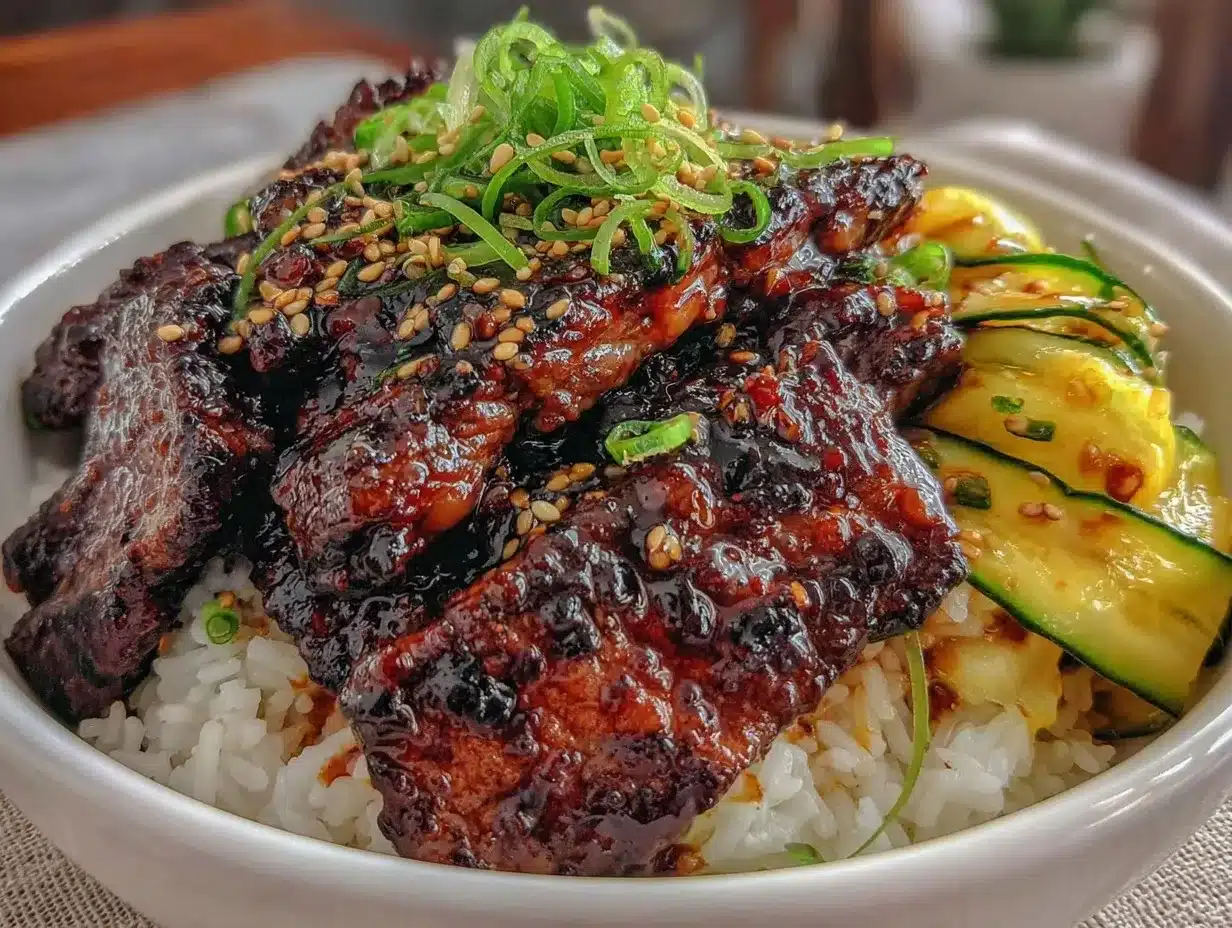
English cucumbers (2 medium, sliced thin / about 400g) — English cucumbers are long, thin, and have fewer seeds. They stay crunchy even after pickling. If you use regular slicing cucumbers, peel them first and scoop out the seeds to avoid wateriness.
Rice vinegar (½ cup / 120ml) — Unseasoned rice vinegar. Not the seasoned kind with sugar and salt already added. You want pure acidity here.
Sugar (2 tablespoons / 30g) — White sugar works, but brown sugar adds a nice color. Balance the tang with a little sweetness.
Salt (1 teaspoon) — Helps draw out the cucumber moisture and starts the pickling process.
Red pepper flakes (½ teaspoon) — Optional, but I love the tiny kick. Adjust to your spice tolerance.
For Assembly
Jasmine or short-grain white rice (2 cups dry / 400g) — Jasmine rice is fragrant and fluffy. Short-grain rice is stickier and more traditional for Korean bowls, but both work. Avoid brown rice here—it’s too chewy for this dish.
Sesame seeds (2 tablespoons, toasted) — Toast them in a dry pan for 2 minutes until golden. It adds a nutty crunch and looks beautiful on top.
Green onions (3 stalks, thinly sliced) — For garnish. Adds a fresh, oniony bite.
Sriracha or Gochujang (optional, for serving) — If you like heat, have a bottle on the table. Gochujang is fermented and deeper in flavor, but Sriracha is easier to find.
Equipment Needed
You don’t need fancy equipment for this. Here’s what I actually use.
Large skillet or Wok — I use a 12-inch stainless steel skillet. It needs to be wide enough to spread the beef in a single layer. If you crowd the pan, the beef steams instead of searing. A wok is great if you have one, but a large skillet works perfectly.
Sharp Chef’s Knife — For slicing the beef thinly and chopping the cucumbers. A dull knife will tear the beef and make it harder to slice against the grain. Learn to sharpen your knives—it changes everything.
Grater — Box grater or microplane for the pear. I use a microplane for the garlic and ginger if I’m using it, but a box grater is fine for the pear.
Rice Cooker or Medium Pot — For cooking the rice. A rice cooker is easier, but a pot works fine. Just make sure you have a tight-fitting lid.
Small Bowl — For mixing the pickling liquid. Any size works.
Measuring Cups and Spoons — Standard stuff. Dollar store versions work fine.
Colander — For draining the pickled cucumbers if they get too watery. Or just use a slotted spoon.
Optional but nice:
– Tongs — For flipping the beef. Makes it easier to handle than a fork.
– Pestle and Mortar — If you’re crushing garlic or ginger, but a knife mince is fine.
How to Make It: Step-by-Step
Alright, let’s make this! I’m walking you through exactly how I do it, including the little tricks I’ve picked up.
Step 1: Prep Your Ingredients (10 minutes)
Before you start cooking, slice your beef. Freeze it for 15-20 minutes first if you can—it makes slicing much easier. You want thin strips, about ¼-inch thick. Slice against the grain for maximum tenderness. While the beef is freezing, grate your pear and mince your garlic. Measure out your marinade ingredients. Once you start cooking, things move fast.
Step 2: Make the Marinade (5 minutes)
In a medium bowl, whisk together the soy sauce, brown sugar, sesame oil, grated pear, minced garlic, and black pepper. The sugar might not dissolve completely at first, but that’s okay—it will melt into the beef as it marinades. Taste it—it should be sweet and salty with a hint of nuttiness.
Step 3: Marinate the Beef (15-30 minutes)
Add the sliced beef to the marinade. Toss it well to coat every piece. Cover and let it sit in the fridge for at least 15 minutes, but up to 2 hours. Don’t go over 2 hours—the pear enzymes can make the beef mushy if it sits too long. If you’re short on time, 15 minutes is enough to get flavor, but 30 is better for tenderness.
Step 4: Start the Pickles (5 minutes)
While the beef marinates, slice the cucumbers. Cut them in half lengthwise, then slice thinly on a bias (diagonally). This increases surface area for pickling. In a small bowl, combine the rice vinegar, sugar, salt, and red pepper flakes. Stir until the sugar and salt dissolve. Add the cucumbers and toss to coat. Set aside. They’ll start to pickle immediately.
Step 5: Cook the Rice (20 minutes)
Rinse your rice until the water runs clear. This removes excess starch and prevents clumping. Cook according to package directions. I usually use a 1:1.5 ratio of rice to water. Fluff it with a fork when it’s done and keep it warm.
Step 6: Sear the Beef (5-7 minutes)
Heat a large skillet over medium-high heat. Add 1 tablespoon of neutral oil (like canola or vegetable). Once the oil shimmers, add the beef in a single layer. Don’t overcrowd the pan—cook in batches if necessary. Let the beef sear for 2-3 minutes without touching it. You want a nice brown crust. Then flip and cook for another 2-3 minutes until cooked through. The beef should be caramelized and slightly sticky.
Step 7: Assemble the Bowls
Drain the pickled cucumbers if there’s excess liquid. Spoon a generous portion of rice into each bowl. Top with the hot beef. Arrange the pickled cucumbers on top. Sprinkle with toasted sesame seeds and sliced green onions. Add a drizzle of sriracha or gochujang if you like heat.
Total Time: About 45 minutes (15 minutes active, 30 minutes mostly hands-off)
Expert Tips & Tricks
Here’s everything I’ve learned from making this dozens of times. These tips will save you from my mistakes.
Freeze the Beef First
This is the #1 tip. Slicing raw beef is hard. Freezing it for 15-20 minutes firms it up, making it so much easier to get thin, even slices. It’s a game-changer.
Don’t Crowd the Pan
If you put too much beef in the skillet at once, it releases moisture and steams instead of searing. You want that caramelized crust. Cook in batches if you have to. It takes an extra 2 minutes but makes a huge difference in texture.
Toast Your Sesame Seeds
Raw sesame seeds are bland. Toast them in a dry pan over medium heat for 2-3 minutes, shaking constantly, until they’re golden and fragrant. It adds a nutty depth that elevates the whole dish.
Use Asian Pear if You Can
Regular apples work, but Asian pears are juicier and have a milder sweetness that tenderizes better. If you use a regular pear, grate it finely and squeeze out excess juice so the marinade isn’t too watery.
Let the Pickles Rest
The cucumbers are best after sitting for at least an hour. The flavors meld and the texture softens slightly while staying crunchy. If you’re in a rush, you can eat them immediately, but they’ll be sharper and less balanced.
Common Mistakes:
– Sauce too salty: Use low-sodium soy sauce if you’re sensitive to salt, and taste the marinade before adding beef.
– Beef is tough: You didn’t slice against the grain, or you overcooked it. Cook it quickly over high heat.
Variations & Substitutions
Once you’ve nailed the basic version, here’s how you can mix it up. I’ve tried all of these.
Chicken Bulgogi
Use boneless, skinless chicken thighs instead of beef. Slice them into strips and marinate for 30 minutes. Cook until golden. It’s lighter but still delicious. I make this for my daughter who doesn’t eat red meat.
Pork Bulgogi
Pork belly or shoulder works well too. Slice thinly and marinate for 1 hour. Pork has a richer flavor that pairs well with the sweet marinade.
Tofu Version
Press extra-firm tofu, slice into slabs, and marinate for 1 hour. Pan-fry until crispy on both sides. It’s a great vegetarian option that absorbs the marinade beautifully.
Spiicier Kick
Add 1 tablespoon of gochujang (Korean chili paste) to the marinade. It adds depth and heat. Serve with extra sriracha on the side.
No Pear?
Use honey or maple syrup instead of grated pear. You’ll miss the tenderizing effect, so marinate for a shorter time (15 minutes) and don’t overcook the beef.
Serving & Storage
How to Serve:
I usually serve this straight from the stove at the dinner table. It’s rustic and stays warm. But here are other ways I’ve enjoyed it:
Side Dishes:
– Simple green salad with sesame dressing
– Steamed broccoli with garlic
– Kimchi (if you want extra tang and probiotics)
Toppings Bar:
When I have guests, I put out: extra sesame seeds, sliced green onions, chili flakes, and gochujang. Everyone customizes their bowl.
Storage Instructions:
Store leftovers in an airtight container in the fridge for up to 3 days. The beef will reheat well in a skillet or microwave. The pickled cucumbers will last up to a week in the fridge—they actually get better with time.
Reheating:
Best method: Reheat the beef in a skillet with a splash of water to keep it moist. Microwave the rice separately. Combine and serve. Don’t reheat the pickles—they’re best cold.
Freezing:
The beef freezes well for up to 1 month. Thaw in the fridge and reheat. The pickles don’t freeze well—the texture gets mushy.
Nutrition Information
I’m not a nutritionist, but here’s the breakdown if you’re tracking.
Per Serving (based on 4 servings):
- Calories: 520
- Protein: 32g
- Carbs: 58g
- Fiber: 3g
- Sugar: 12g
- Fat: 16g
- Saturated Fat: 4g
- Cholesterol: 65mg
- Sodium: 850mg
What’s Good:
– High protein from the beef
– Complex carbs from the rice
– Probiotics from the pickled cucumbers
– Can add vegetables to boost fiber
What to Know:
– Higher in sodium from soy sauce
– Contains gluten (soy sauce)
– Moderate sugar from the marinade and pickles
Look, this is comfort food. It’s not a diet recipe. But it’s way better than takeout, costs less, and I know exactly what’s in it. When I want to make it lighter, I use less sugar and more vegetables. But usually? I just eat a reasonable portion and enjoy it.
Final Thoughts
So that’s my Korean Beef Bulgogi Rice Bowl with Quick Pickled Cucumber! I’ve probably talked your ear off at this point, but when you make a recipe this often, you have a lot to say about it.
This has saved weeknight dinners more times than I can count. It’s my answer to “what’s for dinner” when I’m tired, don’t want takeout, and still want something that tastes really good. My kids are happy, my husband’s happy, and I’m happy because I’m not stressed about cooking.
Make it yours! Try different add-ins, swap in your favorite vegetables, adjust the garlic (though more is always better in my opinion). The best recipes are the ones you adapt to your family’s tastes.
If you make this, drop a comment and let me know what you think! I love hearing how recipes turn out in your kitchen. And if something doesn’t work, tell me that too—I’m here to help troubleshoot.
Happy cooking! And I hope your kitchen smells half as good as mine does right now.
Frequently Asked Questions
Can I use regular pear instead of Asian pear?
Yes, you can. Bosc or Anjou pears work well. Just grate them finely and squeeze out excess juice so the marinade isn’t too watery. The tenderizing effect is slightly less, but the flavor is still great.
Why did my beef turn out tough?
Usually, this means you didn’t slice against the grain, or you overcooked it. Slice the beef perpendicular to the muscle fibers, and cook it quickly over high heat. Don’t let it sit in the pan too long.
Can I make this ahead for a dinner party?
Sort of. Marinate the beef up to 2 hours ahead. Slice the cucumbers and make the pickling liquid up to a day ahead. Cook the rice and sear the beef right before serving. It’s best fresh, but the prep can be done ahead.
Can I use low-sodium soy sauce?
You can, but the dish will be less salty. Taste the marinade before adding beef and adjust with a pinch of salt if needed. Low-sodium soy sauce has less depth of flavor, so you might want to add a splash of regular soy sauce at the end.
How do I reheat leftovers without it getting dry?
Add a splash of water or broth to the skillet when reheating the beef. Cover and heat gently. The steam will keep it moist. Microwave the rice separately. Don’t reheat the pickles.
Can I double this recipe?
Absolutely! Double everything and use your biggest skillet. You’ll need to cook the beef in more batches to avoid overcrowding. The cooking times stay the same.
Is this dish spicy?
The base recipe is not spicy. It’s sweet and savory. If you like heat, add red pepper flakes to the pickles or serve with gochujang or sriracha on the side. Adjust to your taste.
Pin This Recipe!
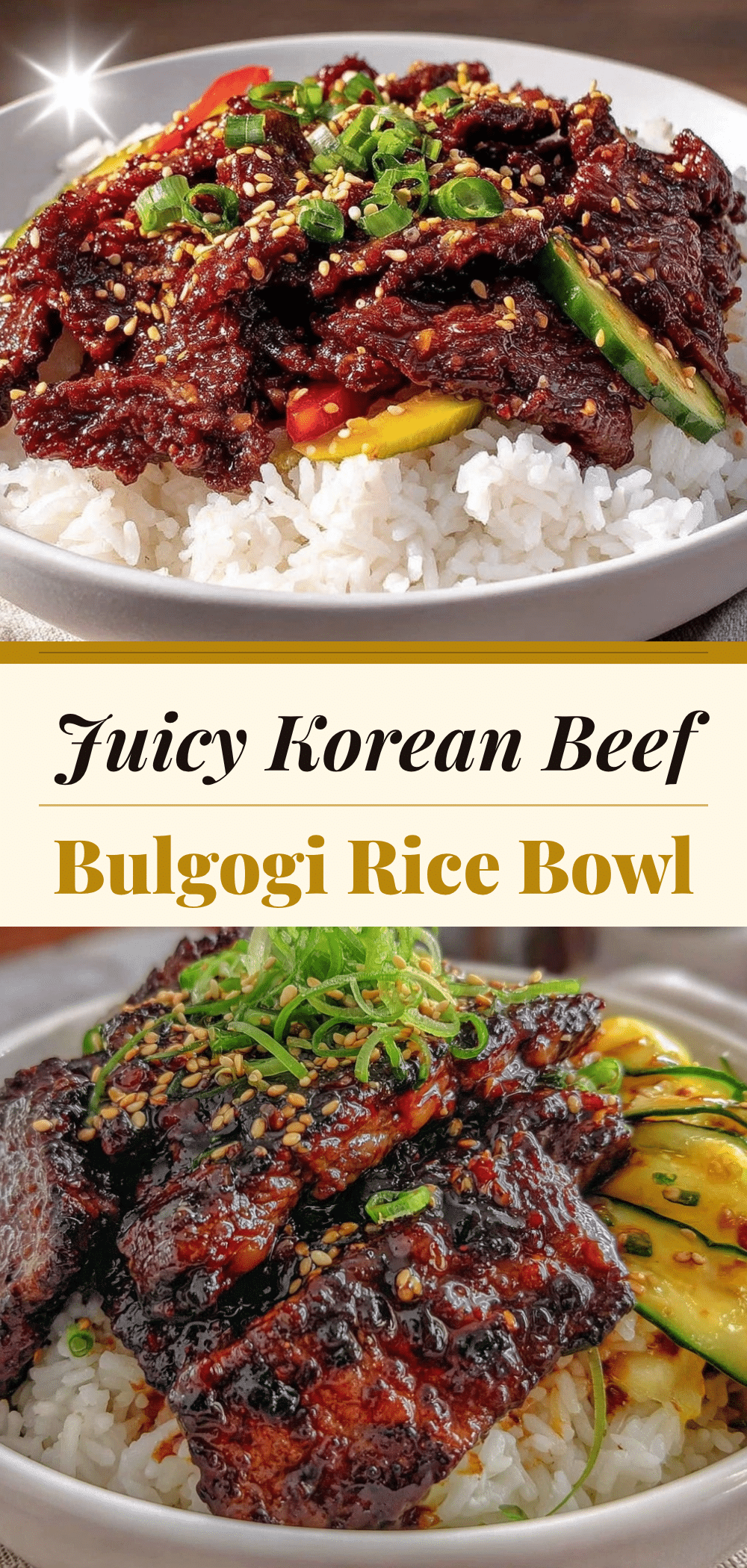
Korean Beef Bulgogi Rice Bowl with Quick Pickled Cucumber
- Total Time: 45 minutes
- Yield: 4 servings 1x
Description
A fast, flavorful weeknight dinner featuring sweet and savory marinated beef served over fluffy rice with bright, crunchy quick-pickled cucumbers.
Ingredients
- 1.5 lbs flank steak or skirt steak
- ½ cup soy sauce
- 3 tablespoons brown sugar
- 2 tablespoons toasted sesame oil
- 1 medium Asian pear or Bosc pear, grated
- 6 cloves garlic, minced
- 1 teaspoon black pepper
- 2 medium English cucumbers, sliced thin
- ½ cup unseasoned rice vinegar
- 2 tablespoons sugar
- 1 teaspoon salt
- ½ teaspoon red pepper flakes
- 2 cups jasmine or short-grain white rice
- 2 tablespoons sesame seeds, toasted
- 3 stalks green onions, thinly sliced
- 1 tablespoon neutral oil (for cooking)
- Sriracha or Gochujang (optional, for serving)
Instructions
- Freeze beef for 15-20 minutes to firm it up, then slice thinly against the grain.
- In a medium bowl, whisk together soy sauce, brown sugar, sesame oil, grated pear, minced garlic, and black pepper to create the marinade.
- Add sliced beef to the marinade, toss to coat, cover, and refrigerate for 15-30 minutes.
- While beef marinates, slice cucumbers thinly on a bias. In a small bowl, combine rice vinegar, sugar, salt, and red pepper flakes. Add cucumbers and toss to coat. Set aside to pickle.
- Rinse rice until water runs clear and cook according to package directions (1:1.5 rice to water ratio). Fluff with a fork and keep warm.
- Heat a large skillet over medium-high heat with 1 tablespoon neutral oil. Add beef in a single layer (cook in batches if necessary) and sear for 2-3 minutes per side until caramelized and cooked through.
- Drain excess liquid from pickled cucumbers if needed.
- Assemble bowls by spooning rice into bowls, topping with hot beef, arranging pickled cucumbers, and sprinkling with toasted sesame seeds and green onions. Serve with Sriracha or Gochujang if desired.
Notes
Freezing the beef makes slicing much easier. Do not overcrowd the pan when searing beef to ensure a good crust rather than steaming. The pickled cucumbers are best after sitting for at least an hour. Leftovers can be stored in the fridge for up to 3 days; pickles last up to a week. Beef freezes well for up to 1 month.
- Prep Time: 15 minutes
- Cook Time: 30 minutes
- Category: Main Course
- Cuisine: Korean
Nutrition
- Serving Size: 1 bowl per serving
- Calories: 520
- Sugar: 12
- Sodium: 850
- Fat: 16
- Saturated Fat: 4
- Carbohydrates: 58
- Fiber: 3
- Protein: 32
Keywords: Korean beef, bulgogi, rice bowl, quick pickled cucumber, weeknight dinner, easy recipe, Asian pear marinade, seared beef


