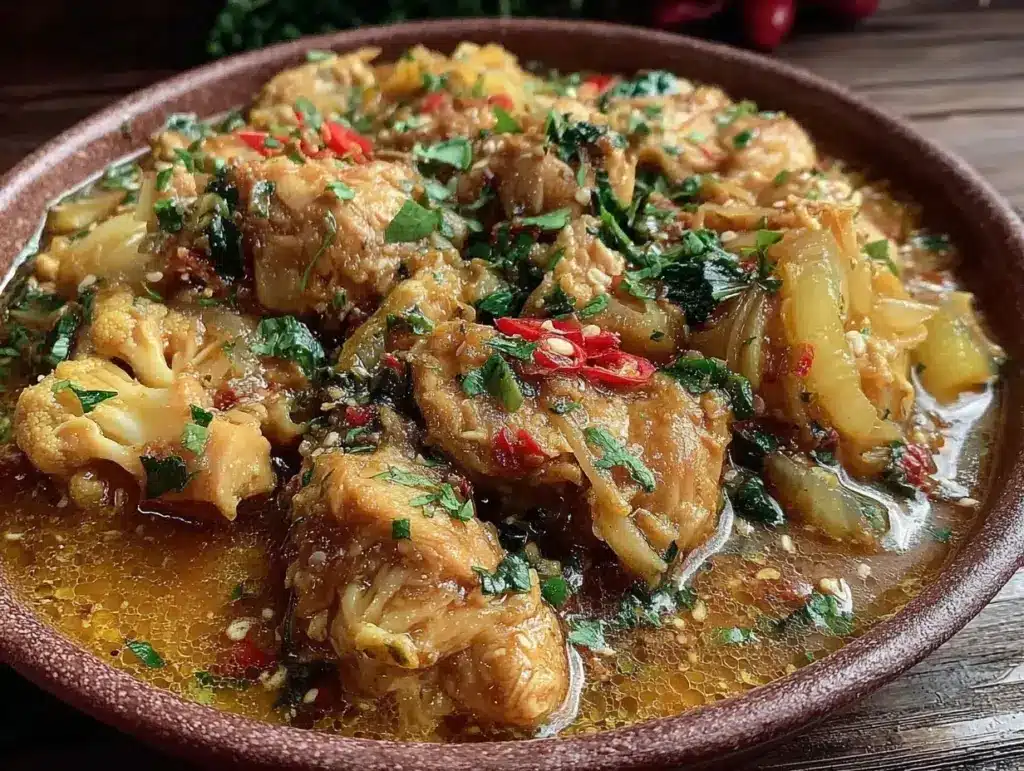
It was 5:15 PM on a Tuesday, and I was staring at the fridge like it owed me money. My husband had texted ten minutes ago: “Running late. Order in?” I looked at the half-empty shelf, the sad bunch of spinach wilting in the crisper, and the can of coconut milk I’d bought for smoothies three weeks ago and completely forgot about.
I didn’t want takeout. Not again. We’d eaten Thai and Indian food so much that month that my stomach was doing weird flip-flops just thinking about it. Plus, takeout curry is usually just salty broth and sad pieces of chicken floating in grease. I wanted something that tasted like I’d spent an hour simmering spices, but I had exactly fifteen minutes of hands-on time before the kids got home from soccer.
So I threw everything into one pot. The dairy-free coconut milk chicken curry I made that night wasn’t just “good for a quick meal.” It was rich, creamy, deeply aromatic, and honestly better than the place down the street. The coconut milk gave it this lush, velvety texture without any heavy cream or dairy, and the spices hit that perfect sweet-heat balance that makes you close your eyes and sigh.
My husband took one bite, looked at his watch, and asked, “Did you order from the restaurant? Because this is restaurant quality.” I didn’t even have the heart to tell him I’d been standing in my kitchen in my yoga pants for 25 minutes total. That’s when I knew I had a winner. This recipe has become my go-to answer to the universal 5pm panic: “What’s for dinner?”
If you’re tired of the same old weeknight rotations or just want to beat the takeout menu, this is your new best friend. It’s one pot, it’s dairy-free, and it tastes like a vacation on a plate. Let me show you how to make it.
Why You’ll Love This Dairy-Free Coconut Milk Chicken Curry
There are about a dozen reasons I keep coming back to this curry, but let’s be real—you care about the ones that actually matter when you’re starving. Here’s why this dairy-free coconut milk chicken curry has taken over our weekly menu.
It’s Actually Creamy (Without Dairy) — I’ve tried so many “light” curries that end up tasting watery or thin. This one uses full-fat coconut milk, which gives it that luxurious, silky mouthfeel you usually only get from heavy cream. It’s rich and satisfying, but because it’s plant-based, I don’t feel sluggish after eating it. It’s the best of both worlds.
One Pot, Minimal Cleanup — Seriously, if you can boil water, you can make this. I brown the chicken, sauté the veggies, simmer the sauce, and serve it all from one large pot or Dutch oven. No fancy blenders, no separate pans for rice (we eat it over rice or with naan, which is a different story), and very little chopping. It’s the ultimate lazy-night win.
Ready in Under 30 Minutes — I’m talking 10 minutes of prep and 20 minutes of simmering. That’s it. I can have this on the table before my kids even finish changing out of their uniforms. It’s faster than waiting for a delivery driver who is “three stops away.”
Freezer-Friendly Magic — This curry actually tastes better the next day. The flavors meld together overnight, making it deeper and more complex. I often double the batch on Sunday and freeze half. It’s like having a homemade meal ready to go on a busy Wednesday. (Pro tip: It freezes beautifully, unlike some of my creamy chicken and wild rice soup, which can separate a bit.)
Customizable Spice Level — Some people love heat; some people cry. This recipe lets you control the spice. I use a mix of mild curry powder and a pinch of cayenne for my family, but if you want to kick it up like my friend’s spicy chipotle corn, you can add more chili paste. It’s your kitchen, your heat level.
Bottom line? It’s comforting, it’s healthy-ish (it has veggies and protein!), and it makes your house smell amazing without requiring a culinary degree. You’ll wonder why you ever ordered takeout.
Ingredients You’ll Need
Here’s the best part: you probably have most of these ingredients already. This isn’t a recipe that requires a trip to three different specialty stores. It’s pantry-friendly, fresh, and simple.
For the Curry Base
Chicken thighs (1.5 lbs / 680g) — Boneless, skinless. I prefer thighs over breasts because they stay juicy and don’t dry out when simmering. If you use breasts, cut them into smaller chunks and watch the cooking time closely. Thighs are forgiving.
Full-fat coconut milk (1 can / 13.5 oz) — Do not use “light” coconut milk unless you want a watery curry. You need the fat for that creamy texture. Shake the can well before opening. I use brands like Native Forest or Aroy-Jo—they’re clean and no weird additives.
Onion (1 large yellow, diced) — Sweetness is key here. Yellow onions break down beautifully into the sauce. White onions are too sharp for this.
Garlic (4 cloves, minced) — Fresh is non-negotiable. Jarred garlic has a sulfurous taste that clashes with the delicate coconut. Mince it yourself. It takes 30 seconds.
Ginger (1 tablespoon, fresh grated) — Fresh ginger adds that bright, zesty kick that makes curry taste “curry-like.” Grate it on a microplane. If you only have ground ginger, use 1 teaspoon, but the flavor will be different.
Curry powder (2-3 tablespoons) — This is the backbone. I use a good quality blend like Spice House or Simply Organic. If you’re making your own, make sure it has turmeric, coriander, cumin, and fenugreek. Fenugreek is the secret smell of Indian restaurants.
Red curry paste (1-2 tablespoons) — This adds depth and heat. I use Maesri brand because it’s authentic and doesn’t have weird fillers. It’s potent, so start with 1 tablespoon and add more if you like it spicy.
For the Veggies & Flavor

Sweet potatoes (1 medium, peeled and cubed) — They add natural sweetness and bulk up the meal. Butternut squash works too. They break down slightly, thickening the sauce.
Red bell pepper (1 large, sliced) — Adds color and a slight crunch. I love the contrast of the sweet pepper against the rich sauce.
Chicken broth (1 cup / 240ml) — Low-sodium is best so you can control the salt. Vegetable broth works fine if you want to keep it vegetarian-friendly (just skip the chicken).
Lime juice (2 tablespoons, fresh squeezed) — This is the game-changer. Acid cuts through the richness of the coconut. Always use fresh lime juice. Bottled tastes like cleaning product.
Fresh cilantro (½ cup, chopped) — For garnish. Don’t skip it. It adds freshness and color. If your family hates cilantro (some people think it tastes like soap), you can use parsley, but cilantro is traditional.
Salt and black pepper — To taste. Taste as you go!
Optional: Spinach or kale (2 cups) — I throw this in at the very end. It wilts instantly and adds a nutritional boost. My kids don’t even notice it’s there.
Equipment Needed
You don’t need fancy gadgets for this. Here’s what I actually use, and what works.
Large Dutch oven or heavy-bottomed pot — I use my 6-quart Le Creuset, but any heavy pot works. You need something that holds heat well and has a lid. A thin pot will burn the coconut milk.
Sharp knife and cutting board — For chopping onions, peppers, and potatoes. A dull knife is dangerous and frustrating.
Measuring spoons — For the spices. Curry powder is potent; eyeballing it can lead to too much or too little flavor.
Wooden spoon or silicone spatula — For stirring. Metal spoons can scratch your pot if you’re using non-stick.
Microplane or grater — For the fresh ginger. It makes mincing way easier.
Optional: Rice cooker or small pot — For cooking the rice. I usually make jasmine rice to serve with this. It’s the perfect vehicle for the sauce.
How to Make It: Step-by-Step
Alright, let’s make this! I’m walking you through exactly how I do it, including the little tricks I’ve picked up over the years.
Step 1: Prep Your Chicken and Veggies (5-8 minutes)
Cut the chicken thighs into 1.5-inch chunks. Pat them dry with paper towels—this is crucial for getting a good sear. If they’re wet, they’ll steam instead of brown. Dice the onion, slice the bell pepper, and cube the sweet potatoes into similar-sized pieces so they cook evenly. Mince the garlic and grate the ginger. Having everything ready before you turn on the heat makes this feel effortless.
Step 2: Sear the Chicken (3-4 minutes)
Heat 1 tablespoon of oil (coconut or avocado oil works best) in your Dutch oven over medium-high heat. Add the chicken pieces in a single layer. Don’t crowd the pan—if you do, they’ll steam. Sear them for 2-3 minutes per side until they’re golden brown. You don’t need to cook them through yet. Just get that flavor. Remove the chicken to a plate and set aside.
Step 3: Sauté the Aromatics (3 minutes)
In the same pot, add a little more oil if needed. Toss in the onions and cook for 2 minutes until they start to soften. Add the garlic, ginger, and curry powder. Stir constantly for 1 minute. You’ll smell the spices bloom—that’s the magic happening. Be careful not to burn the garlic; if it smells bitter, you’ve gone too long.
Step 4: Build the Sauce (2 minutes)
Stir in the red curry paste and cook for another 30 seconds. Then, pour in the coconut milk and chicken broth. Whisk it all together until the spices are dissolved and the sauce is smooth. It should look like a rich, orange-colored cream.
Step 5: Simmer the Curry (15 minutes)
Add the sweet potatoes and bell peppers back into the pot. Bring it to a gentle simmer, then reduce the heat to medium-low. Cover and let it cook for 10 minutes.
After 10 minutes, uncover the pot. Add the seared chicken (and any juices on the plate) back in. Cover again and simmer for another 5-7 minutes, or until the sweet potatoes are tender when pierced with a fork. The sauce should thicken slightly and coat the back of a spoon.
Step 6: Finish and Serve (2 minutes)
Remove the pot from the heat. Stir in the fresh lime juice. This brightens everything up and balances the richness. Taste it. Need more salt? Add it. Want more heat? Add a pinch of cayenne. If it’s too thick, add a splash of water or broth. If it’s too thin, let it simmer uncovered for a couple more minutes.
Stir in fresh spinach if you’re using it—it will wilt in seconds. Serve hot over jasmine rice or with warm naan bread. Garnish with fresh cilantro and a squeeze of lime.
Expert Tips & Tricks
Here’s everything I’ve learned from making this dozens of times. These tips will save you from my mistakes.
Don’t Skimp on the Sear — I know it’s tempting to just dump everything in. But searing the chicken first creates a fond (those brown bits) in the pot that adds incredible depth to the sauce. It’s the difference between “okay” and “wow.”
Use Full-Fat Coconut Milk — I cannot stress this enough. Light coconut milk is basically coconut water with a little fat. It will not make a creamy curry. You need the real stuff. If you’re worried about calories, just enjoy a smaller portion. It’s worth it.
Toast Your Spices — Adding the curry powder and red curry paste to the hot oil before adding the liquid “blooms” the spices. It releases their essential oils and makes the flavor much more vibrant. It’s a small step that makes a huge difference.
Balance the Acid — Coconut milk is rich and fatty. Without the lime juice at the end, the curry can feel heavy. The acid cuts through that fat and wakes up your palate. Don’t skip the lime!
Let It Rest — If you can wait, let the curry sit for 10 minutes after cooking before serving. The flavors continue to meld and deepen. It’s like a stew—it gets better with a little rest.
Variations & Substitutions
Once you’ve nailed the basic version, here’s how you can mix it up. I’ve tried all of these.
Shrimp Curry — Swap chicken for shrimp. Add the shrimp in the last 3 minutes of cooking. Shrimp cooks fast, so don’t overdo it or they’ll get rubbery.
Vegetarian Version — Skip the chicken and use vegetable broth. Add chickpeas or tofu for protein. I love adding extra veggies like cauliflower or green beans. It’s just as satisfying.
Spicy Kick — If you love heat, add a diced jalapeño with the onions, or stir in 1 teaspoon of sriracha at the end. For a smoky heat, try adding a little chipotle powder. It reminds me of the spicy chipotle corn we make for parties.
Green Curry — Swap the red curry paste and powder for green curry paste. It’s usually spicier and has a brighter, herbal flavor from the basil and lemongrass. Serve with Thai basil leaves.
Coconut Rice — Instead of plain rice, cook your jasmine rice in half water and half coconut milk. It’s sweet, creamy, and pairs perfectly with the savory curry.
Serving & Storage
How to Serve: I usually serve this straight from the pot at the dinner table. It looks rustic and stays warm. Pair it with steamed jasmine rice, basmati rice, or warm naan bread. A simple side salad with cucumber and tomato works well to cut the richness.
Leftovers: Store in an airtight container in the fridge for up to 4 days. The flavors get even better the next day. Reheat gently on the stove over low heat, adding a splash of water or coconut milk if it’s too thick.
Freezing: This freezes well for up to 3 months. Let it cool completely, then transfer to freezer-safe bags or containers. Thaw in the fridge overnight and reheat gently. Note: The texture of the sweet potatoes might soften a bit, but it’s still delicious.
Meal Prep: This is a great meal prep dish. Portion it into containers with rice. It reheats evenly in the microwave. Just stir in a splash of water before heating to keep it moist.
Nutrition Information
I’m not a nutritionist, but here’s the breakdown if you’re tracking. Keep in mind that this is an estimate based on standard ingredients.
Per Serving (based on 4 servings):
- Calories: 450
- Protein: 35g
- Carbs: 30g
- Fiber: 5g
- Sugar: 8g
- Fat: 22g
- Saturated Fat: 14g
- Sodium: 400mg
What’s Good: High in protein, good source of fiber from the veggies, and healthy fats from the coconut milk. It’s a balanced meal that keeps you full.
What to Know: It’s higher in calories due to the coconut milk, but those are mostly healthy fats. If you’re watching sodium, use low-sodium broth and control the salt added.
My Take: This isn’t “diet food,” but it’s not junk food either. It’s wholesome, nourishing comfort food. When I want to make it lighter, I add more veggies and less rice. But usually? I just eat a reasonable portion and enjoy it. Life’s too short to stress over every calorie.
Final Thoughts
So that’s my go-to dairy-free coconut milk chicken curry! I’ve probably talked your ear off at this point, but when you make a recipe this often, you have a lot to say about it.
This has saved weeknight dinners more times than I can count. It’s my answer to “what’s for dinner” when I’m tired, don’t want takeout, and still want something that tastes really good. My kids are happy, my husband’s happy, and I’m happy because I’m not stressed about cooking.
Make it yours! Try different add-ins, swap in your favorite vegetables, adjust the spice. The best recipes are the ones you adapt to your family’s tastes. If you make this, drop a comment and let me know what you think! I love hearing how recipes turn out in your kitchen. And if something doesn’t work, tell me that too—I’m here to help troubleshoot.
Happy cooking! And I hope your kitchen smells half as good as mine does right now.
Frequently Asked Questions
Can I use chicken breasts instead of thighs?
Yes, but thighs are better. Breasts can dry out quickly when simmered. If you use breasts, cut them into smaller pieces and reduce the simmering time by 5 minutes. Check them early so they don’t become tough.
Why is my curry too thin?
Coconut milk varies by brand. If your sauce is too thin, simmer it uncovered for 5-10 minutes to reduce. You can also add a tablespoon of cornstarch mixed with water to thicken it, but usually, just simmering works fine.
Can I make this in a slow cooker?
Absolutely! Sear the chicken and sauté the onions/spices in a pan first (don’t skip this step for flavor), then dump everything into the slow cooker. Cook on low for 6-8 hours or high for 3-4 hours. Add the lime juice and spinach at the end.
What rice goes best with this?
Jasmine rice is the classic choice. It’s fragrant and slightly sticky, which is perfect for soaking up the sauce. Basmati rice is another great option if you prefer something fluffier. For a lower-carb option, serve it over cauliflower rice.
Is this curry spicy?
It’s mild to medium. The curry powder adds warmth, and the red curry paste adds a little kick. If you’re sensitive to spice, use 1 tablespoon of paste and no cayenne. If you love heat, add more paste or a dash of chili flakes.
Can I freeze this curry?
Yes, it freezes well for up to 3 months. Store it in an airtight container or freezer bag. Thaw in the fridge overnight and reheat gently on the stove. The texture might change slightly, but the flavor remains great.
What if I don’t have red curry paste?
You can use green curry paste, or even yellow curry paste. Just adjust the amount to taste. If you have none, you can increase the curry powder and add a pinch of cayenne for heat, but the flavor will be different. It’ll still be good, just not traditional.
Pin This Recipe!
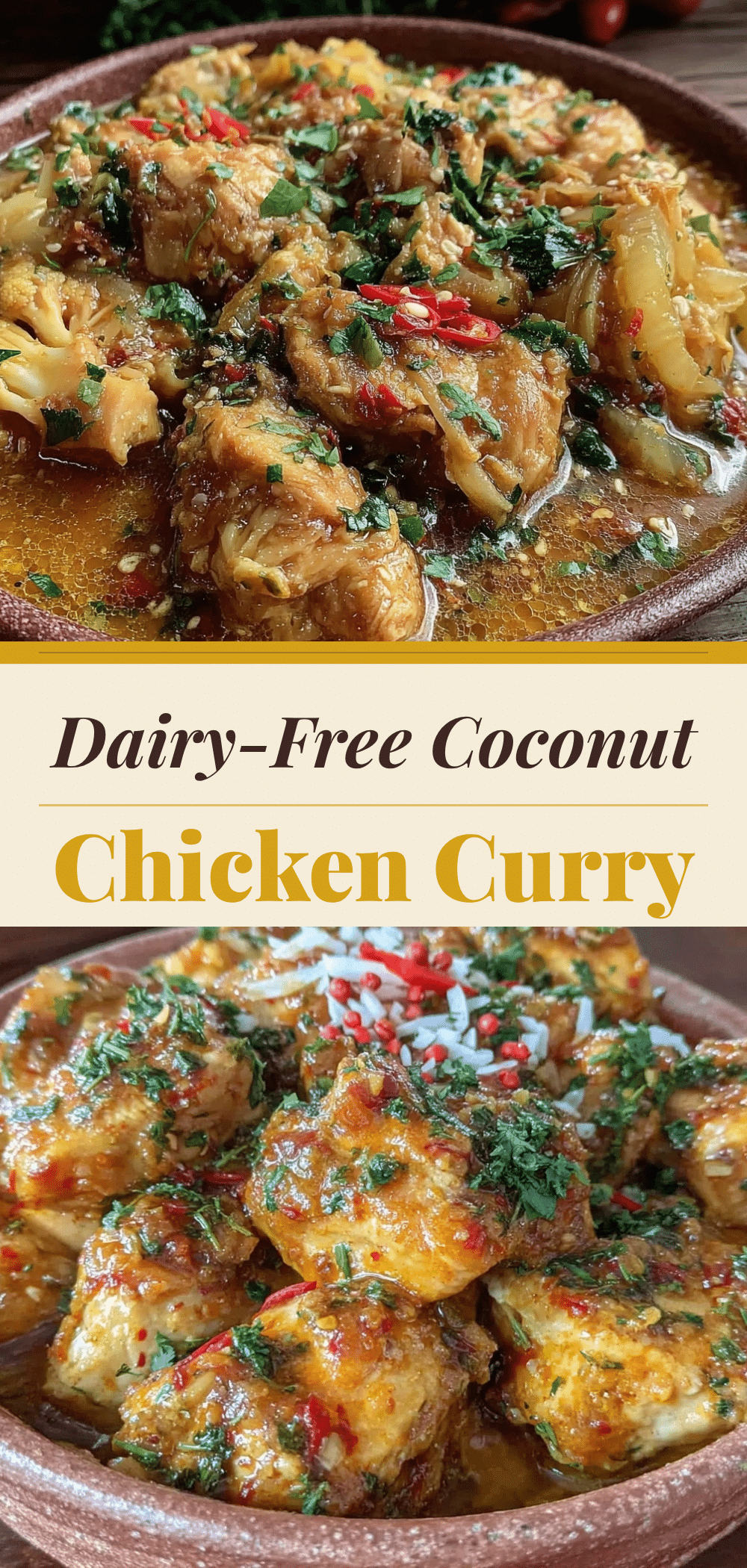

Dairy-Free Coconut Milk Chicken Curry
- Total Time: 30 minutes
- Yield: 4 servings 1x
Description
A rich, creamy, and dairy-free chicken curry made in one pot with full-fat coconut milk, fresh spices, and vegetables. Ready in under 30 minutes, this weeknight dinner hack is perfect for busy families and tastes better than takeout.
Ingredients
- 1.5 lbs boneless, skinless chicken thighs, cut into 1.5-inch chunks
- 1 can (13.5 oz) full-fat coconut milk, shaken well
- 1 large yellow onion, diced
- 4 cloves garlic, minced
- 1 tablespoon fresh ginger, grated
- 2–3 tablespoons curry powder
- 1–2 tablespoons red curry paste
- 1 medium sweet potato, peeled and cubed
- 1 large red bell pepper, sliced
- 1 cup low-sodium chicken broth
- 2 tablespoons fresh lime juice
- ½ cup fresh cilantro, chopped
- Salt and black pepper to taste
- 2 cups spinach or kale (optional)
- 1 tablespoon oil (coconut or avocado oil)
Instructions
- Prep the chicken and veggies: Cut chicken thighs into chunks and pat dry. Dice onion, slice bell pepper, and cube sweet potatoes. Mince garlic and grate ginger.
- Sear the chicken: Heat oil in a large Dutch oven over medium-high heat. Sear chicken in a single layer for 2-3 minutes per side until golden brown. Remove chicken to a plate.
- Sauté aromatics: In the same pot, add onions and cook for 2 minutes. Add garlic, ginger, and curry powder; stir constantly for 1 minute until fragrant.
- Build the sauce: Stir in red curry paste for 30 seconds. Pour in coconut milk and chicken broth, whisking until smooth.
- Simmer: Add sweet potatoes and bell peppers. Bring to a simmer, cover, and cook for 10 minutes.
- Finish cooking: Uncover, add the seared chicken and juices back to the pot. Cover and simmer for another 5-7 minutes until sweet potatoes are tender and sauce coats the back of a spoon.
- Season and serve: Remove from heat. Stir in lime juice, salt, and pepper to taste. Add spinach if using, letting it wilt. Serve hot over jasmine rice or with naan, garnished with cilantro and lime.
- Optional: Let the curry rest for 10 minutes before serving to allow flavors to meld.
Notes
Use full-fat coconut milk for a creamy texture; light coconut milk will result in a watery curry. Searing the chicken first adds depth to the sauce. Toasting the spices in oil ‘blooms’ their flavor. Adjust spice levels by varying the amount of red curry paste or adding cayenne. This recipe freezes well for up to 3 months.
- Prep Time: 10 minutes
- Cook Time: 20 minutes
- Category: Main Course
- Cuisine: Indian
Nutrition
- Serving Size: 1 bowl with rice
- Calories: 450
- Sugar: 8
- Sodium: 400
- Fat: 22
- Saturated Fat: 14
- Carbohydrates: 30
- Fiber: 5
- Protein: 35
Keywords: dairy-free, coconut milk chicken curry, one pot meal, quick dinner, weeknight dinner, gluten-free, healthy curry, 5pm dinner hack


