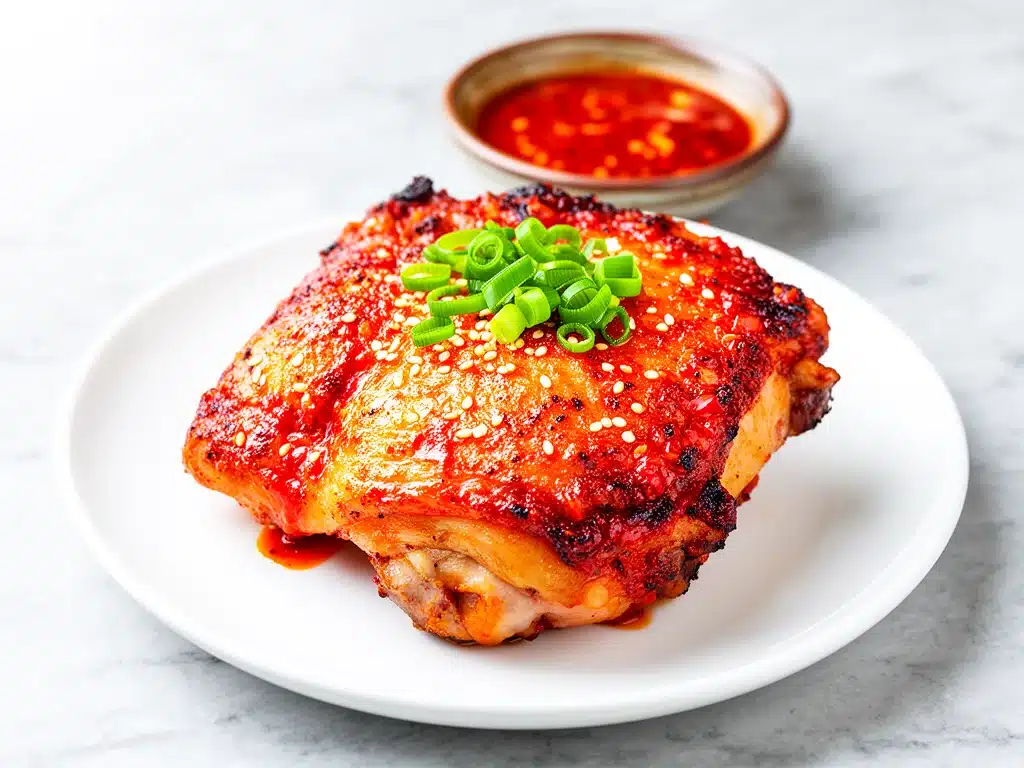
Last Tuesday, I stood in my kitchen at 7:30 PM, staring at my phone with a delivery app open. My stomach was growling, my energy was non-existent, and the thought of chopping vegetables or cleaning a pan felt like climbing Mount Everest. I ordered the usual spicy chicken combo, knowing full well it would arrive lukewarm, soggy, and costing me $25 after tips. Then, something clicked. I looked at the half-empty jar of gochujang in my spice rack—the one I bought three months ago and never used—and I thought, “I can make this at home. Actually, I can make it better than takeout.”
So, I closed the app. I grabbed a package of chicken thighs. And I threw together what I thought would be a mediocre weeknight dinner. Thirty minutes later, I had crispy, sticky, fiery-sweet chicken thighs that smelled like a high-end Korean BBQ joint. My husband walked in, took one bite, and said, “Why are we ordering out?” That’s the moment I knew I had cracked the code. This Crispy Korean Gochujang Glazed Chicken Thighs recipe has completely taken over our dinner rotation. It’s not just easier than takeout; it’s genuinely superior in every way. Crispy on the outside, tender and juicy on the inside, and coated in a glaze that hits every flavor note: sweet, spicy, savory, and garlicky.
I’ve tested this recipe at least eight times in the last two months. I’ve tweaked the cornstarch ratios, adjusted the sugar levels, and figured out the exact temperature needed to get that shatteringly crisp skin without burning the garlic. The result? A dish that looks like it came from a trendy Seoul restaurant but costs a fraction of the price and comes together in 30 minutes. If you’re tired of soggy, bland delivery chicken, you need to stop scrolling and start cooking. This is the recipe that will change your weeknight life.
Why You’ll Love This Recipe
There are about ten reasons I keep making this, but here are the big ones that keep it in my regular rotation. This isn’t just another chicken recipe; it’s a flavor bomb that requires minimal effort for maximum reward.
Actually Crispy Skin — Seriously, if you’ve ever tried making crispy chicken at home, you know the struggle. Most methods leave you with greasy, soft skin. This recipe uses a double-coating technique with cornstarch and a specific searing method that guarantees a crunchy exterior. I’ve served this to my picky eater cousin, and even he couldn’t stop picking off the crispy bits. It’s the kind of texture that keeps you coming back for more.
That Perfect Glaze — The sauce is where the magic happens. It’s not just “spicy.” It’s complex. The gochujang provides a deep, fermented heat, balanced by the sweetness of honey and the umami of soy sauce. When it reduces, it turns into this glossy, sticky coating that clings to every nook and cranny of the chicken. It’s addictive. I’ve caught myself licking my fingers more times than I’d like to admit.
Lightning Fast — 30 minutes from start to finish. And only 15 of those are active cooking. The rest is just simmering and crisping. I make this on nights when I’m exhausted, don’t want to order out, and still want something that tastes like I put in effort. It’s the ultimate hack for busy weeknights.
Budget-Smart — Feeds 4 people for under $15. That’s less than one order of takeout, and you get way more chicken. Plus, you’re using affordable chicken thighs instead of expensive breast meat. Thighs stay juicy and don’t dry out in the oven or pan, making them perfect for this high-heat method.
Crowd-Pleaser — I’ve made this for dinner parties, family gatherings, and date nights. Everyone loves it. The spice level is adjustable (more on that below), so even mild eaters can enjoy it, while heat seekers can turn up the fire. It’s versatile enough to be a main dish, a taco filling, or a rice bowl topping.
This is my go-to when I need dinner to just work. No complicated techniques, no weird ingredients you have to hunt for, just reliable, delicious food that makes everyone happy. If you haven’t tried gochujang before, this is the perfect entry point. Trust me, once you taste it, you’ll never go back to bottled hot sauce.
Ingredients You’ll Need
Here’s the best part: you probably have most of this already. The sauce relies on a few key flavor profiles, but they’re staples in most pantries. I’m particular about three ingredients here, and I’ll tell you exactly why they matter.
Chicken Thighs (2 pounds / 900g, boneless and skin-on) — Do not use chicken breasts. They will dry out and become rubbery under this cooking method. Skin-on thighs are non-negotiable for that extra crispiness. If you can’t find skin-on, remove the skin but pat them extremely dry. Boneless, skinless thighs work too, but the skin adds a layer of flavor and texture that’s hard to beat. I buy mine from the local butcher when I can, but any standard grocery store brand works.
Cornstarch (½ cup / 60g) — This is the secret weapon. Cornstarch creates that shatteringly crisp coating. It absorbs moisture from the chicken and creates a barrier that fries itself in the pan. I use all-purpose cornstarch, not potato starch. It’s cheap and it works perfectly. Don’t skip this step, or you’ll end up with steamed chicken instead of crispy chicken.
Gochujang (3 tablespoons / 45g) — This is Korean chili paste, and it’s the heart of the recipe. It’s fermented, so it has a deep, savory complexity that regular hot sauce just doesn’t have. I always buy the CJ brand or Sunchang brand from the Asian grocery section. If you can’t find it, sriracha mixed with a little miso paste is a weak substitute, but I highly recommend finding real gochujang. It’s worth the trip to the store.
Honey (¼ cup / 60ml) — I use raw honey for its floral notes, but any honey works. The sweetness balances the heat from the gochujang. If you’re avoiding sugar, you can use maple syrup, but the texture won’t be quite as glossy.
Soy Sauce (2 tablespoons / 30ml) — Use low-sodium soy sauce so you can control the saltiness. Regular soy sauce works, but you might need to reduce the added salt in the recipe. It adds that essential umami depth.
Rice Vinegar (1 tablespoon / 15ml) — This adds brightness and cuts through the richness of the chicken and honey. Don’t substitute with white vinegar or apple cider vinegar; the flavor profile will be off. Rice vinegar is mild and slightly sweet, which is perfect here.
Sesame Oil (1 teaspoon) — Just a little bit goes a long way. It adds that nutty, toasted aroma that screams “Korean food.” I keep a bottle in my pantry specifically for Asian dishes. If you’re out, you can skip it, but it really elevates the final dish.
Garlic (4 cloves, minced) — Yes, four cloves. Don’t skimp. Fresh garlic is essential. Jarred garlic has a metallic taste that clashes with the delicate balance of the sauce. Minced finely so it distributes evenly in the glaze.
Ginger (1 teaspoon, fresh grated) — Fresh ginger adds a warm, spicy kick that complements the chili paste. Pre-grated ginger in a tube works in a pinch, but fresh tastes so much better. Grate it on a microplane for the smoothest texture.
Sesame Seeds (1 tablespoon, toasted) — For garnish. Toasting them in a dry pan for 1-2 minutes brings out their nutty flavor. It’s a small detail, but it makes the dish look professional and adds a nice crunch.
Green Onions (2 stalks, sliced) — For garnish. The fresh, sharp bite of green onion cuts through the heavy, sweet glaze. I use both the white and green parts for maximum flavor.
Red Pepper Flakes (½ teaspoon, optional) — If you like extra heat, add this to the sauce. Start with less if you’re sensitive to spice. You can always add more, but you can’t take it away.
Equipment Needed
You don’t need fancy equipment for this. Here’s what I actually use.
Large Skillet or Wok — I use a 12-inch cast iron skillet. It holds heat well, which is crucial for getting that crispy skin. Stainless steel works too, but cast iron is my favorite. Avoid non-stick if you want maximum crispiness, though it will still work if that’s all you have.
Cutting Board — Any size works. I use plastic for easier cleanup, but wood is fine too. Just make sure it’s clean!
Sharp Knife — For mincing garlic and slicing green onions. A dull knife is dangerous and makes mincing a nightmare. Invest in a good chef’s knife if you don’t have one.
Mixing Bowls — One medium bowl for the chicken coating, one small bowl for the sauce. I use glass bowls because they’re easy to clean and don’t stain.
Whisk — For mixing the sauce. A small whisk works best for getting into the corners of the bowl.
Tongs — For flipping the chicken. Tongs give you better control than a spatula, especially when you’re trying to keep the skin intact.
Spatula — For scraping the bottom of the pan and stirring the sauce. A silicone spatula is best because it won’t scratch your pan.
Measuring Cups and Spoons — Pretty standard stuff. Dollar store versions work fine for this recipe. Accuracy matters less here than in baking, but it helps to be consistent.
Plate — For resting the chicken. I line mine with paper towels to absorb excess oil if needed, though the cornstarch coating usually prevents greasiness.
How to Make It: Step-by-Step
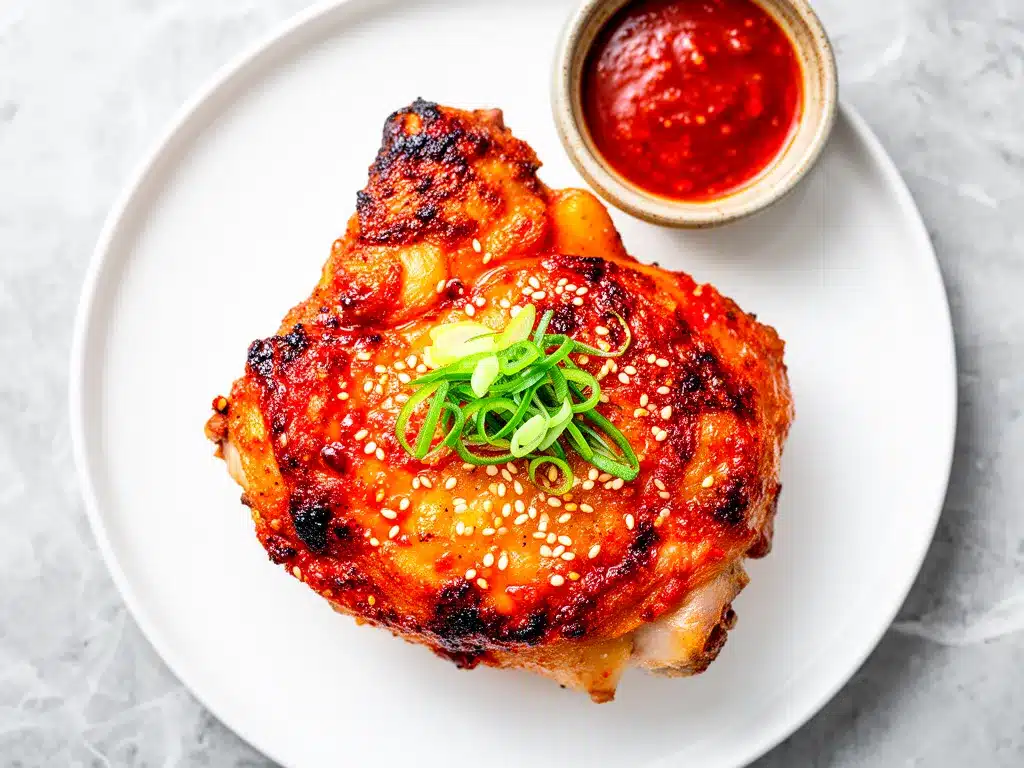
Alright, let’s make this! I’m walking you through exactly how I do it, including the little tricks I’ve picked up.
Step 1: Prep the Chicken (5 minutes)
Pat the chicken thighs completely dry with paper towels. This is crucial. Moisture is the enemy of crispiness. If the chicken is wet, it will steam instead of fry. Season both sides generously with salt and black pepper. Then, toss them in the cornstarch. I like to do this in a zip-top bag for easy cleanup. Shake it well so every nook and cranny is coated. The chicken should look dusty and pale. This coating will create that crispy crust.
Step 2: Make the Glaze (2 minutes)
In a small bowl, whisk together the gochujang, honey, soy sauce, rice vinegar, sesame oil, minced garlic, and grated ginger. Taste it. It should be sweet, spicy, and savory. If it’s too spicy, add a little more honey. If it’s too sweet, add a splash more vinegar or soy sauce. Set aside. The garlic and ginger will start to infuse the sauce immediately.
Step 3: Sear the Chicken (10 minutes)
Heat a large skillet over medium-high heat. Add 1 tablespoon of oil (vegetable or canola). Once the oil is shimmering, add the chicken thighs skin-side down. Do not overcrowd the pan. Cook in batches if necessary. Let them cook undisturbed for 5-6 minutes. You want to hear a loud sizzle. Resist the urge to move them! Let the crust form. After 5 minutes, the skin should be golden brown and crispy. Flip them and cook for another 3-4 minutes on the other side until cooked through. Internal temperature should reach 165°F (74°C). Remove from pan and set aside on a plate.
Step 4: Reduce the Sauce (3 minutes)
Wipe out the pan with a paper towel if there’s excess oil (leave a little bit for flavor). Lower the heat to medium. Pour in the sauce mixture. It will bubble up quickly. Let it simmer for 2-3 minutes, stirring constantly. The sauce will thicken and become glossy. It should coat the back of a spoon. If it gets too thick, add a splash of water. If it’s too thin, let it reduce a bit longer.
Step 5: Glaze and Finish (2 minutes)
Return the chicken to the pan. Toss each thigh in the sauce, making sure it’s fully coated. Let it cook for 1 minute to let the flavors meld. The sauce will cling to the crispy coating. Remove from heat. Garnish with toasted sesame seeds and sliced green onions. Serve immediately.
Total Time: About 25-30 minutes. The key is patience during the searing step. Don’t rush it, or you’ll miss out on that perfect crunch.
Expert Tips & Tricks
Here’s everything I’ve learned from making this dozens of times. These tips will save you from my mistakes.
Pat Dry, Then Pat Dry Again
I cannot stress this enough. Wet chicken = soggy chicken. Use paper towels to absorb every drop of moisture. If your chicken is very wet, let it sit on the counter for 10 minutes before cooking to air dry. It sounds like a pain, but it makes a huge difference.
Don’t Crowd the Pan
If you put too many thighs in the pan at once, the temperature drops, and the chicken steams instead of frying. Give each piece space. If you have a small pan, cook in two batches. It’s worth the extra 5 minutes.
Toast Your Sesame Seeds
Raw sesame seeds are bland. Toasting them in a dry pan for 1-2 minutes unlocks their nutty flavor. It’s a tiny step that makes the dish taste like it came from a restaurant. I keep a small jar of toasted sesame seeds in my pantry for this exact reason.
Adjust the Heat
Gochujang varies in heat level depending on the brand. If you’re sensitive to spice, start with 2 tablespoons instead of 3. You can always add more, but you can’t take it away. For heat seekers, add red pepper flakes or a dash of sriracha to the sauce.
Save the Pan Sauce
If you have leftover sauce in the pan, don’t pour it out! Drizzle it over rice or stir-fried vegetables. It’s liquid gold. I’ve used it as a dipping sauce for spring rolls too.
Variations & Substitutions
Once you’ve nailed the basic version, here’s how you can mix it up. I’ve tried all of these.
Chicken Breast Version
Use boneless, skinless chicken breasts. Pound them to even thickness so they cook evenly. They will be less juicy than thighs, so don’t overcook them. Remove from heat as soon as they reach 165°F.
Veggie-Loaded
Toss in broccoli florets or snap peas in the last 2 minutes of cooking. They’ll steam slightly and absorb the sauce. This is how I get my kids to eat vegetables. They love the sweet and spicy flavor.
Spicy Tofu Version
Use extra-firm tofu, pressed and cubed. Coat in cornstarch and fry until crispy. Then toss in the sauce. It’s a great vegetarian option that has the same texture as chicken.
Lighter Version
Reduce the honey to 2 tablespoons and use low-sodium soy sauce. It’s still flavorful but slightly less sweet. I make this when I’m trying to watch my sugar intake.
Rice Bowl Style
Serve over steamed jasmine rice with a fried egg on top. The runny yolk mixes with the sauce to create an even richer glaze. This is my favorite way to eat it.
Serving & Storage
How to Serve:
I usually serve this straight from the skillet at the dinner table—it looks rustic and stays warm. But here are other ways I’ve enjoyed it:
Side Dishes:
- Steamed jasmine rice (essential for soaking up the sauce)
- Sesame spinach (quick and easy)
- Pickled cucumbers (the crunch and acidity cut the richness)
- Kimchi (for an authentic Korean side)
Toppings Bar:
When I have guests, I put out: extra gochujang, sliced green onions, sesame seeds, and chili oil. Everyone customizes their bowl.
Storage Instructions:
Refrigerator: Store in an airtight container for up to 3 days. The chicken will stay crispy for about 24 hours, then it will soften as it absorbs the sauce. This is actually delicious the next day, just slightly softer.
Reheating: Best method: Reheat in a skillet over medium heat to restore crispiness. Add a splash of water to the pan to steam it slightly and prevent burning. Microwave method: Heat in 30-second intervals, but it will lose its crunch. I don’t recommend microwaving if you care about texture.
Freezing: I don’t recommend freezing this dish. The cornstarch coating can become gummy when thawed, and the sauce may separate. Make it fresh for the best results.
Nutrition Information
I’m not a nutritionist, but here’s the breakdown if you’re tracking.
Per Serving (based on 4 servings):
- Calories: 450
- Protein: 35g
- Carbs: 25g
- Fiber: 1g
- Sugar: 18g
- Fat: 22g
- Saturated Fat: 5g
- Cholesterol: 120mg
- Sodium: 650mg
What’s Good:
- High protein from the chicken
- Gluten-free if you use tamari instead of soy sauce
- Uses healthy fats from sesame oil
What to Know:
- Higher in sodium due to soy sauce and gochujang
- Contains sugar from honey
- Calorie-dense due to the skin and oil
My Take:
Look, this is comfort food. It’s not a diet recipe. But it’s way better than takeout, costs less, and I know exactly what’s in it. When I want to make it lighter, I use chicken breasts and reduce the honey. But usually? I just eat a reasonable portion and enjoy it.
Final Thoughts
So that’s my go-to Crispy Korean Gochujang Glazed Chicken Thighs! I’ve probably talked your ear off at this point, but when you make a recipe this often, you have a lot to say about it.
This has saved weeknight dinners more times than I can count. It’s my answer to “what’s for dinner” when I’m tired, don’t want takeout, and still want something that tastes really good. My kids are happy, my husband’s happy, and I’m happy because I’m not stressed about cooking.
Make it yours! Try different add-ins, swap in your favorite vegetables, adjust the garlic (though more is always better in my opinion). The best recipes are the ones you adapt to your family’s tastes.
If you make this, drop a comment and let me know what you think! I love hearing how recipes turn out in your kitchen. And if something doesn’t work, tell me that too—I’m here to help troubleshoot.
Happy cooking! And I hope your kitchen smells half as good as mine does right now.
Frequently Asked Questions
Q: Can I use chicken breasts instead of thighs?
A: You can, but they will be less juicy and more prone to drying out. If you use breasts, pound them to an even thickness and watch them closely. Remove from heat as soon as they reach 165°F. Thighs are just more forgiving and flavorful.
Q: Where can I find gochujang?
A: It’s usually in the Asian aisle of most grocery stores, near the soy sauce and miso. If your local store doesn’t carry it, try an Asian grocery store or order it online. It’s worth the effort—it’s the key ingredient.
Q: Why did my sauce get too thick?
A: The cornstarch in the chicken coating can thicken the sauce as it cooks. If it gets too thick, add a splash of water or chicken broth to thin it out. You want a glossy, pourable consistency.
Q: Can I make this ahead for a dinner party?
A: You can prep the chicken and make the sauce ahead. But cook the chicken and glaze it right before serving. The crispy coating will soften if it sits in the sauce too long. I usually cook the chicken first, then make the sauce, then toss it all together at the last minute.
Q: Is this recipe gluten-free?
A: It can be! Just swap the soy sauce for tamari or coconut aminos. The rest of the ingredients are naturally gluten-free. Double-check your gochujang label, as some brands may contain wheat, though most don’t.
Q: How spicy is this recipe?
A: It’s medium heat. The gochujang has a deep, fermented heat, but the honey and sesame oil balance it out. If you’re sensitive to spice, reduce the gochujang to 2 tablespoons. If you love heat, add red pepper flakes or a dash of sriracha.
Q: Can I freeze the leftovers?
A: I don’t recommend it. The cornstarch coating can become gummy when thawed, and the sauce may separate. It’s best eaten fresh or stored in the fridge for up to 3 days.
Pin This Recipe!
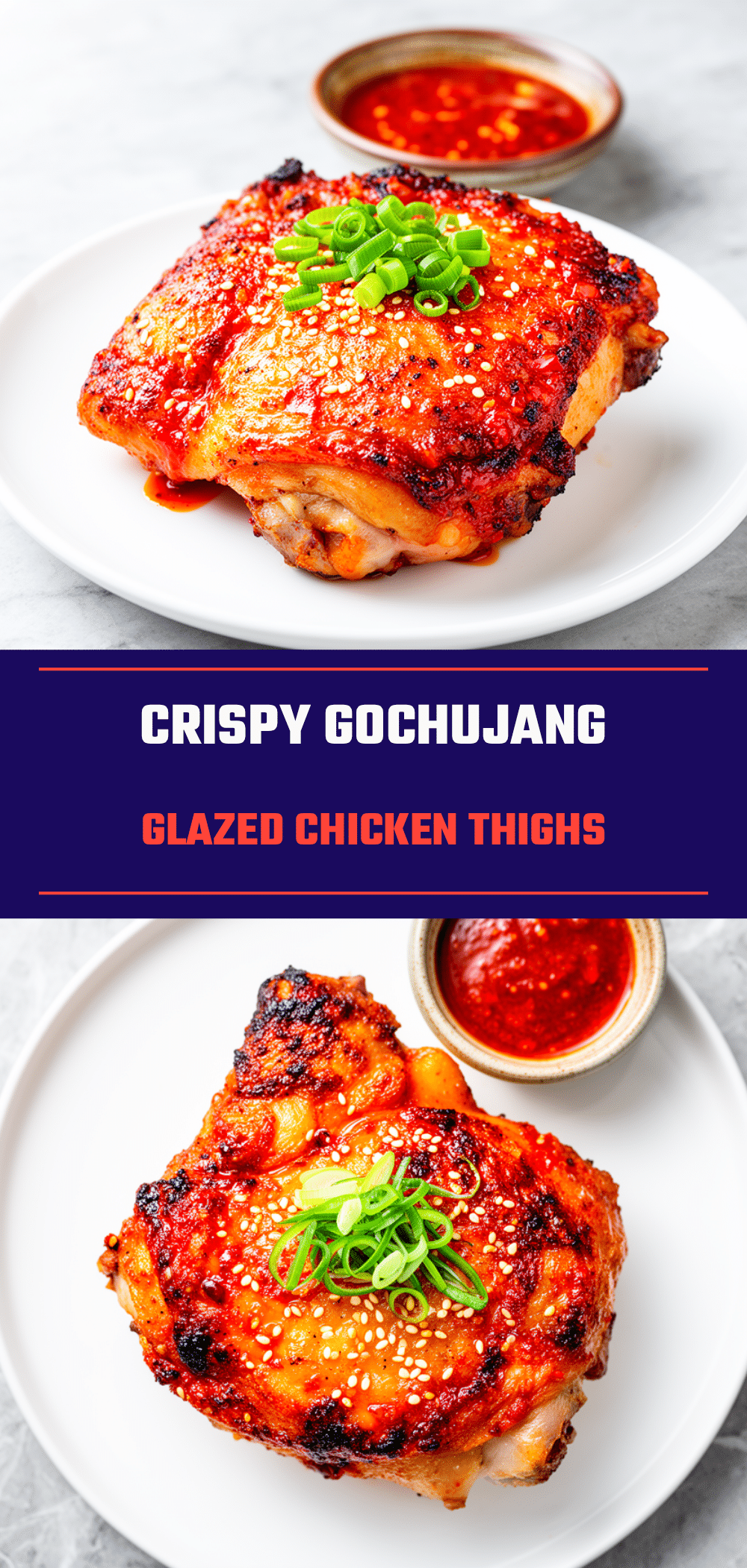
Crispy Korean Gochujang Glazed Chicken Thighs: Better Than Takeout
- Total Time: 25-30 minutes
- Yield: 4 servings 1x
Description
A quick, 30-minute weeknight dinner featuring crispy, skin-on chicken thighs coated in a sticky, sweet, and spicy gochujang glaze. This recipe is easier and superior to takeout, using a double-coating technique for maximum crunch.
Ingredients
- 2 pounds boneless, skin-on chicken thighs
- 1/2 cup cornstarch
- Salt and black pepper
- 3 tablespoons gochujang (Korean chili paste)
- 1/4 cup honey
- 2 tablespoons soy sauce (low-sodium recommended)
- 1 tablespoon rice vinegar
- 1 teaspoon sesame oil
- 4 cloves garlic, minced
- 1 teaspoon fresh ginger, grated
- 1 tablespoon toasted sesame seeds
- 2 stalks green onions, sliced
- 1 tablespoon vegetable or canola oil (for cooking)
- 1/2 teaspoon red pepper flakes (optional)
Instructions
- Pat chicken thighs completely dry with paper towels and season generously with salt and black pepper.
- Toss chicken in cornstarch until fully coated (dusty appearance).
- In a small bowl, whisk together gochujang, honey, soy sauce, rice vinegar, sesame oil, minced garlic, and grated ginger.
- Heat a large skillet over medium-high heat with 1 tablespoon of oil.
- Place chicken skin-side down in the skillet. Cook undisturbed for 5-6 minutes until golden brown and crispy.
- Flip chicken and cook for another 3-4 minutes until internal temperature reaches 165°F. Remove from pan.
- Wipe excess oil from the pan if necessary, then pour in the sauce mixture.
- Simmer sauce over medium heat for 2-3 minutes, stirring constantly, until thickened and glossy.
- Return chicken to the pan and toss to coat evenly in the glaze.
- Cook for 1 minute to meld flavors, then garnish with toasted sesame seeds and green onions. Serve immediately.
Notes
Patting the chicken dry is crucial for crispiness. Do not crowd the pan to ensure proper searing. If the sauce gets too thick, add a splash of water. For a lighter version, reduce honey to 2 tablespoons and use chicken breasts. This dish is best eaten fresh; freezing is not recommended as the coating may become gummy.
- Prep Time: 5 minutes
- Cook Time: 20 minutes
- Category: Main Course
- Cuisine: Korean
Nutrition
- Serving Size: 1 chicken thigh with
- Calories: 450
- Sugar: 18
- Sodium: 650
- Fat: 22
- Saturated Fat: 5
- Carbohydrates: 25
- Fiber: 1
- Protein: 35
Keywords: Korean chicken, gochujang, crispy chicken, weeknight dinner, spicy chicken, glazed chicken, chicken thighs, better than takeout, easy dinner


