It was 4:45 PM on a Tuesday, and I was staring into the abyss of my open refrigerator. The light flickered, illuminating a sad container of leftover rice, three eggs that were probably past their prime, and a single, lonely lemon. My blood sugar was doing that jittery thing where I get hangry and slightly irritable, and my husband had just texted, “What’s for dinner?” I didn’t have the mental bandwidth for a complicated recipe, and I definitely didn’t have the energy to heat up the stove for a sauté that would leave me scrubbing pans for twenty minutes.
That is exactly how I stumbled onto this diabetic-friendly baked salmon with Dijon herb crust. I wasn’t trying to be a chef. I was trying to survive the evening without ordering takeout (which usually spikes my glucose and empties my wallet).
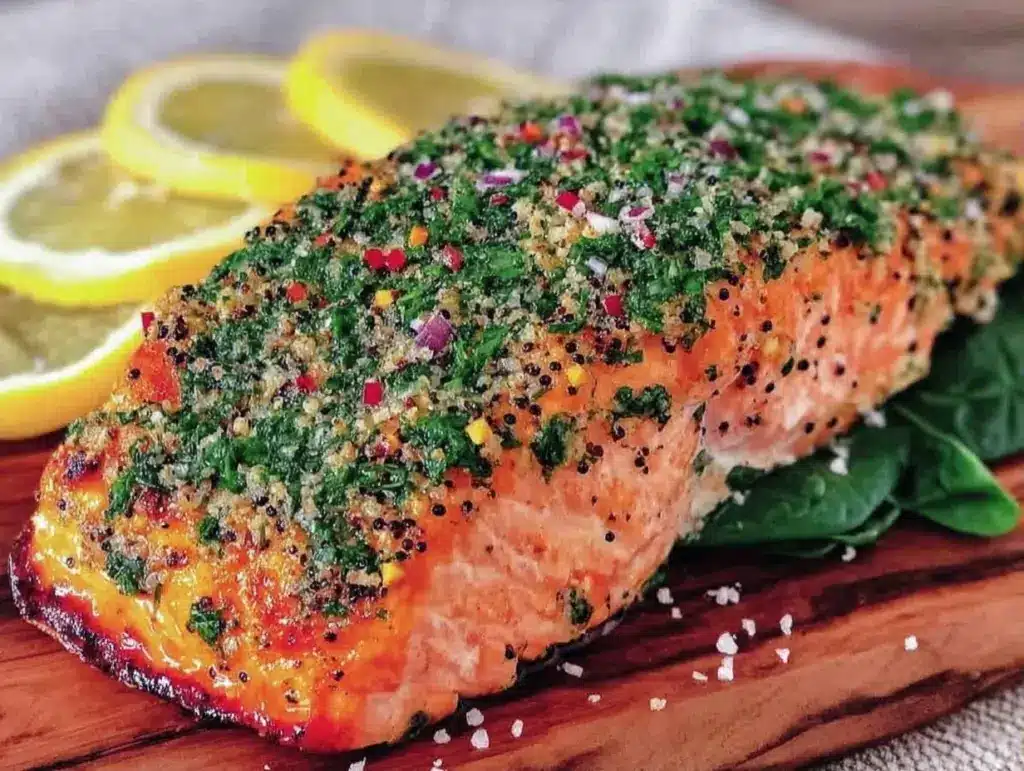
I threw together this simple Dijon mixture, slathered it on some salmon fillets I had thawing in the fridge, and popped them in the oven. Ten minutes later, my kitchen smelled like a fancy bistro, and the dinner was ready. Best part? It’s low-carb, high-protein, and actually tastes good without feeling like “diet food.” I’ve made this diabetic-friendly baked salmon with Dijon herb crust at least once a week since that chaotic Tuesday. It’s become my go-to answer for “5pm and nothing planned.”
Why You’ll Love This Diabetic-Friendly Baked Salmon
Look, I get it. Cooking for blood sugar management can feel restrictive. But this recipe isn’t about deprivation; it’s about smart, flavorful choices that don’t taste like cardboard. Here’s why this diabetic-friendly baked salmon with Dijon herb crust has earned a permanent spot in our weekly rotation:
- Zero Stress Cleanup — Seriously, if you can line a baking sheet with parchment paper, you can make this. One pan. That’s it. No splattering oil, no dirty pots. I love that I can throw this in while I’m still folding laundry.
- Steady Energy, No Crash — Salmon is packed with healthy omega-3s and protein, which keeps blood sugar stable. No carb-heavy sides means no 3 PM crash. I feel full and satisfied, not sluggish.
- Flavor Bomb in Minutes — The Dijon and herb crust adds a punch of tangy, savory flavor that makes you forget you’re eating “healthy.” It’s crispy on the outside, flaky on the inside. My husband, who usually prefers crispy bang bang shrimp tacos, actually asks for this when he’s trying to eat cleaner.
- Pantry-Friendly Ingredients — You probably have Dijon mustard, dried herbs, and olive oil already. No weird specialty stores or hard-to-find ingredients. Just good, simple food.
- Restaurant Quality at Home — This looks and tastes like something you’d order at a nice seafood place, but it costs a fraction of the price and takes half the time. It feels fancy without the fuss.
This is my answer to the “what’s for dinner” panic. It’s reliable, it’s healthy, and it doesn’t require a culinary degree.
Ingredients You’ll Need for Diabetic-Friendly Baked Salmon
Here’s the best part: this ingredient list is short. I’m not exaggerating. You don’t need a shopping trip for this. I’m particular about a few things here, but mostly, it’s about quality over quantity.
For the Salmon
Salmon fillets (4 pieces, about 6 oz each / 170g each) — I use wild-caught Atlantic or sockeye when on sale. Wild has better flavor and more nutrients. If you’re watching your budget, farmed is fine too, just rinse off any excess packaging liquid. Pat them dry! Wet salmon doesn’t crisp up.
Extra virgin olive oil (2 tablespoons / 30ml) — Use good quality here. It’s the base of the crust and adds healthy fats. I keep a bottle of Bertolli or a local brand in my pantry. Don’t skimp on the oil; it helps the herbs stick.
For the Dijon Herb Crust
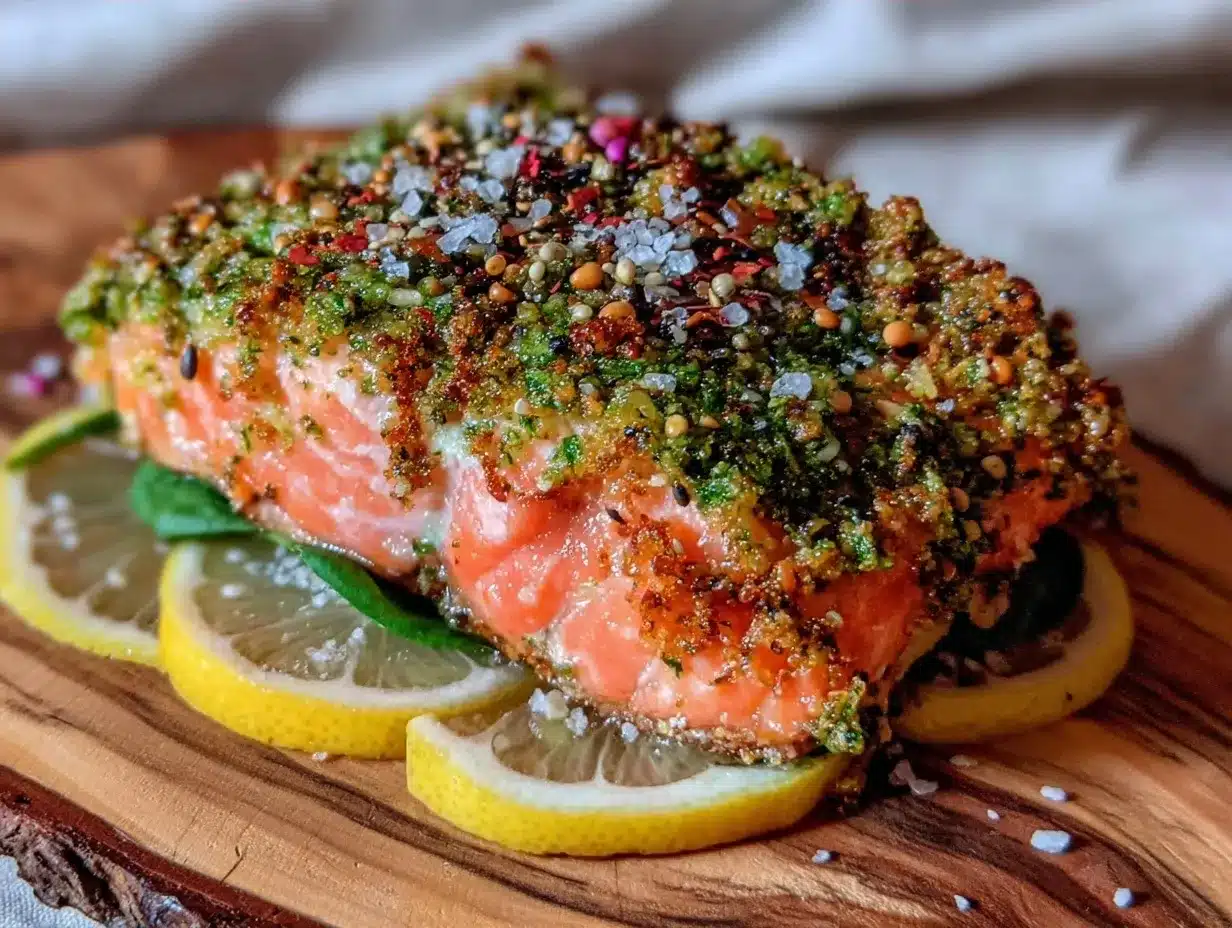
Dijon mustard (2 tablespoons / 30g) — This is the star. Use a classic Dijon, not the spicy brown or whole grain versions. It provides that tangy kick and helps the herbs adhere. I always keep a jar of Grey Poupon or Maille on hand.
Dried herbs (1 tablespoon total / 5g) — I use a mix of dried thyme and dried oregano. Or just use your favorite Italian seasoning. Fresh herbs work too, but they burn easier in the oven. Dried is more forgiving for weeknights.
Garlic powder (1 teaspoon / 2g) — Not fresh garlic. Fresh garlic can burn and turn bitter in the oven. Garlic powder gives that savory depth without the risk. If you must use fresh, mince it super fine, but powder is safer.
Onion powder (½ teaspoon / 1g) — Adds sweetness and complexity. Don’t skip it. It balances the sharpness of the Dijon.
Sea salt (½ teaspoon / 3g) — Adjust to taste. I use coarse sea salt because it distributes evenly. If you’re strictly watching sodium, use less or skip it.
Black pepper (¼ teaspoon / 1g) — Freshly cracked is best. It adds a little heat and aroma.
Optional: Lemon zest (1 teaspoon / 2g) — If you have a lemon, grate some zest into the mixture. It brightens everything up. I do this when I’m feeling fancy.
For Serving
Butter (1 tablespoon / 15g) — Optional, but a little butter on top right after baking adds richness. I use salted butter.
Lemon wedges (for serving) — Essential. The acid cuts through the richness of the salmon and the mustard.
Equipment Needed
You don’t need fancy equipment for this. Here’s what I actually use:
Baking sheet — Standard 13×18 inch works perfectly. I use a rimmed sheet so the juices don’t spill. My old aluminum one works fine; no need for stainless steel.
Parchment paper — This is non-negotiable for easy cleanup. Line your baking sheet. It prevents sticking and means you just toss the paper after dinner. Life is too short for scrubbing baked-on fish.
Small mixing bowl — Any small bowl will do. I use a ramekin or a small ceramic dish I keep for sauces.
Pastry brush or spoon — To spread the mustard mixture. A silicone brush is nice, but a regular spoon works just as well. I usually just use the back of a spoon.
Oven — Obviously. Preheat to 400°F (200°C). I like a higher heat to get that crust crispy without drying out the fish.
How to Make It: Step-by-Step
Alright, let’s make this! I’m walking you through exactly how I do it, including the little tricks I’ve picked up over the years.
Step 1: Prep the Oven and Pan (2 minutes)
Preheat your oven to 400°F (200°C). While it’s heating, line a baking sheet with parchment paper. I know you *could* use foil, but parchment is better for cleanup and prevents sticking. Just tear off a piece that fits your pan and lay it down. Done.
Step 2: Prep the Salmon (3 minutes)
Pat the salmon fillets dry with paper towels. This is crucial. If the fish is wet, the crust won’t stick, and it’ll steam instead of bake. Place the fillets on the prepared baking sheet. Space them out so they’re not touching. This allows heat to circulate and cook them evenly.
Step 3: Make the Crust (2 minutes)
In your small mixing bowl, combine the Dijon mustard, olive oil, dried herbs, garlic powder, onion powder, salt, and pepper. Whisk it together with a fork until it’s a smooth paste. If you’re adding lemon zest, stir it in now. The mixture should be thick and fragrant. If it’s too dry, add a tiny splash more olive oil.
Step 4: Coat the Salmon (2 minutes)
Spread the Dijon herb mixture evenly over the top of each salmon fillet. I like to get it right to the edges. Don’t worry about covering the sides; you want the top to get crispy. Press the herbs gently into the mustard so they stick. It should look like a little herb-y mustard blanket on top.
Step 5: Bake (12-15 minutes)
Place the baking sheet in the preheated oven. Bake for 12-15 minutes. The exact time depends on the thickness of your fillets. A 6-ounce fillet usually takes about 12 minutes. A thicker 8-ounce fillet might need 15. The salmon is done when it flakes easily with a fork and is opaque throughout. It should still be slightly pink in the center if you like it juicy, but make sure it’s not raw.
Step 6: Rest and Serve (2 minutes)
Remove the salmon from the oven. Let it rest for 2 minutes. This lets the juices redistribute. If you cut into it immediately, the juices run out and it dries up. Drizzle with a little extra olive oil or a pat of butter if you want. Serve with lemon wedges.
Total Time: About 20 minutes (5 minutes prep, 15 minutes cook).
Troubleshooting Tips
- Sauce too runny? Add more herbs or a pinch of flour to thicken the mixture before applying.
- Fish sticking to pan? You didn’t use parchment paper, or the salmon was too wet. Always pat dry!
- Dry salmon? You overcooked it. Next time, check at 10 minutes. Salmon continues to cook slightly after removal from the oven.
Expert Tips & Tricks
Here’s everything I’ve learned from making this dozens of times. These tips will save you from my mistakes.
Don’t Overcook It
Salmon goes from perfect to dry in about 30 seconds. I set a timer for 10 minutes, then check it. If it flakes easily, it’s done. If it’s still translucent in the middle, give it another 2 minutes. Trust your eyes, not just the clock.
Pat Dry, Always
I can’t stress this enough. Wet salmon = sad salmon. Use paper towels and really press down to remove moisture. It makes a huge difference in texture.
Use Fresh Lemon
Pre-bottled lemon juice doesn’t have the same brightness. Always squeeze a fresh lemon over the salmon right before serving. It wakes up the whole dish.
Herb Variety
While thyme and oregano are classic, try adding a little smoked paprika for a smoky kick. Or swap the dried herbs for fresh dill (add it after baking so it doesn’t burn). Fresh dill and salmon are best friends.
Make it a Meal
This salmon is great on its own, but if you want sides, keep them low-carb. I love it with spicy chipotle corn (if you’re watching carbs, skip the corn or use cauliflower rice) or a simple green salad. It also pairs well with roasted asparagus or zucchini.
Variations & Substitutions
Once you’ve nailed the basic version, here’s how you can mix it up. I’ve tried all of these.
Honey Garlic Version
Swap the Dijon for a mix of soy sauce (or tamari), minced garlic, and a teaspoon of honey. It’s sweeter and more Asian-inspired. Great if you like honey sriracha glazed salmon rice bowls but want it baked.
Maple Mustard
Add a tablespoon of pure maple syrup to the Dijon mixture. It caramelizes beautifully in the oven. My kids love this version.
Cajun Kick
Add 1 teaspoon of Cajun seasoning to the herb mix. It adds a nice heat that pairs well with the coolness of the lemon.
Gluten-Free
This recipe is naturally gluten-free, but check your Dijon and spices to ensure no cross-contamination. Most major brands are safe.
Dairy-Free
Skip the butter drizzle. Use olive oil instead. The rest of the recipe is already dairy-free.
Vegetarian Swap
You can use this same crust on thick slices of firm tofu or portobello mushrooms. Bake at the same temperature for 15-20 minutes. It’s surprisingly good.
Serving & Storage
How to Serve:
I usually serve this straight from the baking sheet at the table. It looks rustic and keeps warm. Pair it with steamed broccoli, cauliflower rice, or a simple arugula salad with balsamic vinaigrette. I also love it with a side of loaded baked potato salad if I’m not watching carbs that night.
Leftovers:
Store leftover salmon in an airtight container in the fridge for up to 3 days. It’s great cold over salad or warmed up gently in the microwave.
Reheating:
Reheat gently in the microwave with a splash of water to keep it moist. Or warm it in a 350°F oven for 10 minutes. Don’t overheat it or it’ll get rubbery.
Freezing:
You can freeze cooked salmon, but the texture changes. It’s best eaten fresh. If you must freeze, wrap tightly in plastic and foil. Thaw in the fridge overnight.
Nutrition Information
I’m not a nutritionist, but here’s the breakdown if you’re tracking. This is per serving (1 fillet):
- Calories: 320
- Protein: 34g
- Carbs: 2g (net carbs)
- Fat: 18g
- Fiber: 0g
- Sugar: 1g
It’s high in protein and healthy fats, with very few carbs. Perfect for blood sugar management. If you add sides, adjust accordingly. I try to fill half my plate with non-starchy veggies to boost fiber.
Final Thoughts
So that’s my go-to diabetic-friendly baked salmon with Dijon herb crust! I’ve probably talked your ear off at this point, but when you find a recipe that works so well, you want to share it. This has saved weeknight dinners more times than I can count. It’s my answer to “what’s for dinner” when I’m tired, don’t want takeout, and still want something that tastes really good.
Make it yours! Try different herbs, add some chili flakes, or swap the mustard for horseradish. The best recipes are the ones you adapt to your family’s tastes. If you make this, drop a comment and let me know what you think! I love hearing how recipes turn out in your kitchen.
Happy cooking! And I hope your kitchen smells half as good as mine does right now.
Frequently Asked Questions
Q: Can I use frozen salmon?
A: Yes, but thaw it completely first. Place it in the fridge the night before. If you’re in a hurry, run it under cold water until thawed. Pat it very dry before adding the crust. Wet frozen salmon can be tricky.
Q: Why did my salmon stick to the pan?
A: Most likely, you didn’t use parchment paper, or the salmon wasn’t dry enough. Always use parchment and pat the fish dry. Also, don’t move the salmon while it’s cooking. Let it release naturally.
Q: Is this safe for diabetics?
A: Yes, this recipe is low-carb and high-protein, which is great for blood sugar management. However, always consult your doctor or dietitian for personalized advice. I’m sharing what works for me, but everyone’s body is different.
Q: Can I add vegetables to the same pan?
A: Yes! You can add asparagus or broccoli florets to the pan around the salmon. They’ll cook in the same time. Just make sure they’re not too crowded so they roast instead of steam.
Q: What if I don’t have Dijon mustard?
A: You can use whole grain mustard, but the flavor will be different. Or try a mixture of olive oil, garlic powder, and lemon juice. It won’t have the same tang, but it’ll still be good.
Q: How do I know when the salmon is done?
A: The easiest way is to check the internal temperature. It should reach 145°F (63°C). Or, press the top gently; it should feel firm but still spring back slightly. If it flakes easily with a fork, it’s done.
Q: Can I make this ahead of time?
A: You can prep the crust mixture ahead of time and store it in the fridge. Apply it to the salmon right before baking. Don’t apply it too early, or the salt in the mustard might draw out moisture and make the fish watery.
Pin This Recipe!
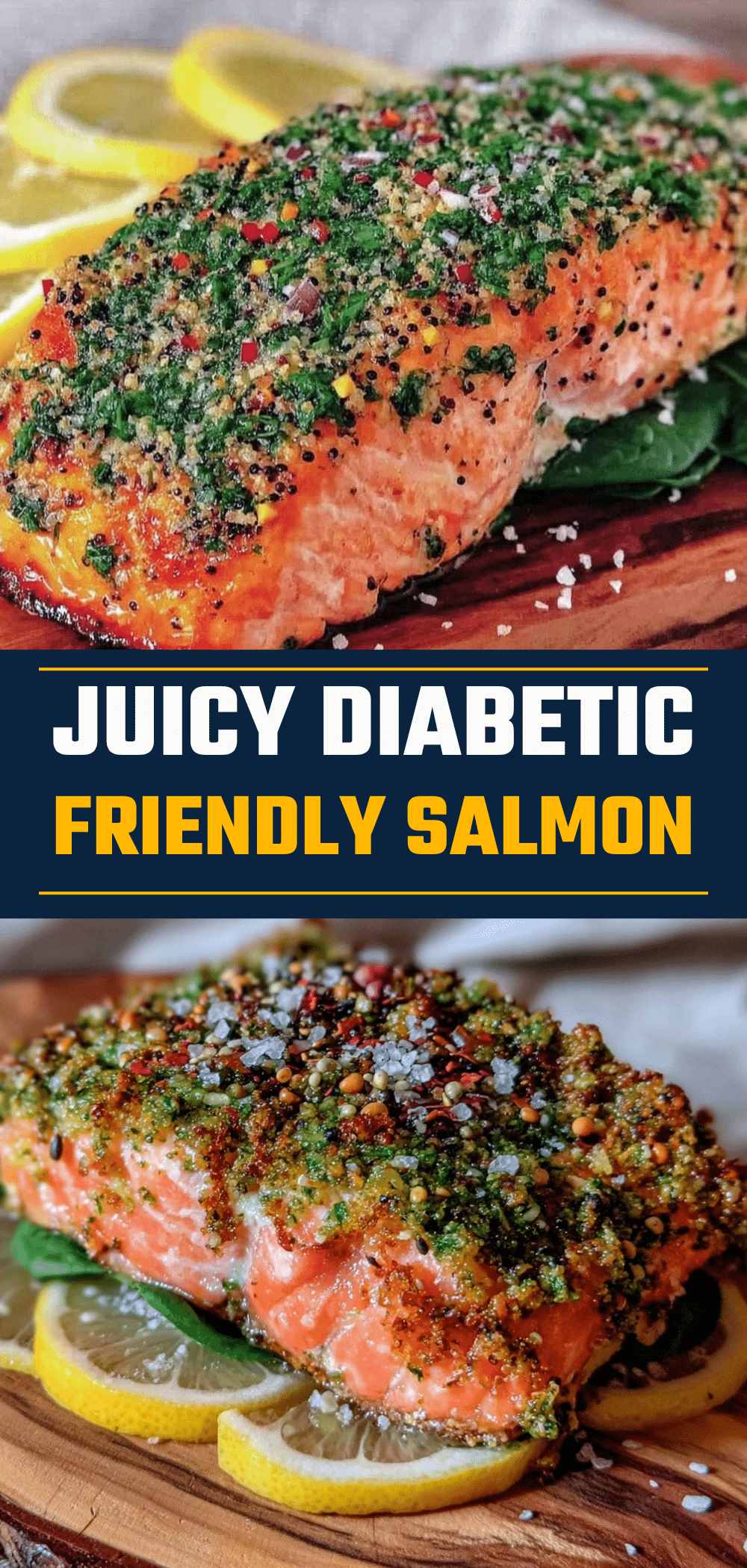

Diabetic-Friendly Baked Salmon with Dijon Herb Crust
- Total Time: 20 minutes
- Yield: 4 servings 1x
Description
A quick, low-carb, and high-protein baked salmon recipe featuring a tangy Dijon and herb crust. Perfect for weeknight dinners, this one-pan meal is easy to make, requires minimal cleanup, and helps maintain stable blood sugar levels.
Ingredients
- 4 salmon fillets (about 6 oz / 170g each)
- 2 tablespoons extra virgin olive oil
- 2 tablespoons Dijon mustard
- 1 tablespoon dried herbs (thyme and oregano or Italian seasoning)
- 1 teaspoon garlic powder
- 1/2 teaspoon onion powder
- 1/2 teaspoon sea salt
- 1/4 teaspoon black pepper
- 1 teaspoon lemon zest (optional)
- 1 tablespoon butter (optional, for serving)
- Lemon wedges (for serving)
Instructions
- Preheat oven to 400°F (200°C). Line a standard 13×18 inch baking sheet with parchment paper.
- Pat the salmon fillets dry with paper towels to ensure the crust sticks and the fish bakes rather than steams. Place fillets on the prepared baking sheet, ensuring they are not touching.
- In a small mixing bowl, whisk together the Dijon mustard, olive oil, dried herbs, garlic powder, onion powder, salt, pepper, and lemon zest (if using) until a smooth paste forms.
- Spread the Dijon herb mixture evenly over the top of each salmon fillet, pressing gently to adhere. Do not cover the sides.
- Bake in the preheated oven for 12-15 minutes, depending on fillet thickness. The salmon is done when it flakes easily with a fork and is opaque throughout.
- Remove from oven and let rest for 2 minutes to allow juices to redistribute.
- Serve with a pat of butter (optional) and fresh lemon wedges.
Notes
[‘Patting the salmon dry is crucial for a crispy crust and to prevent sticking.’, ‘Salmon continues to cook slightly after removal from the oven; check at 10 minutes to avoid overcooking.’, ‘For a gluten-free version, ensure your Dijon and spices are certified gluten-free.’, ‘For a dairy-free version, skip the butter drizzle and use olive oil instead.’, ‘Can be served with low-carb sides like steamed broccoli, cauliflower rice, or roasted asparagus.’]
- Prep Time: 5 minutes
- Cook Time: 15 minutes
- Category: Main Course
- Cuisine: American
Nutrition
- Serving Size: 1 salmon fillet (app
- Calories: 320
- Sugar: 1
- Sodium: 400
- Fat: 18
- Saturated Fat: 3
- Carbohydrates: 2
- Protein: 34
Keywords: diabetic-friendly, baked salmon, low-carb, high-protein, Dijon herb crust, quick dinner, healthy seafood, gluten-free, dairy-free option, weeknight meal


