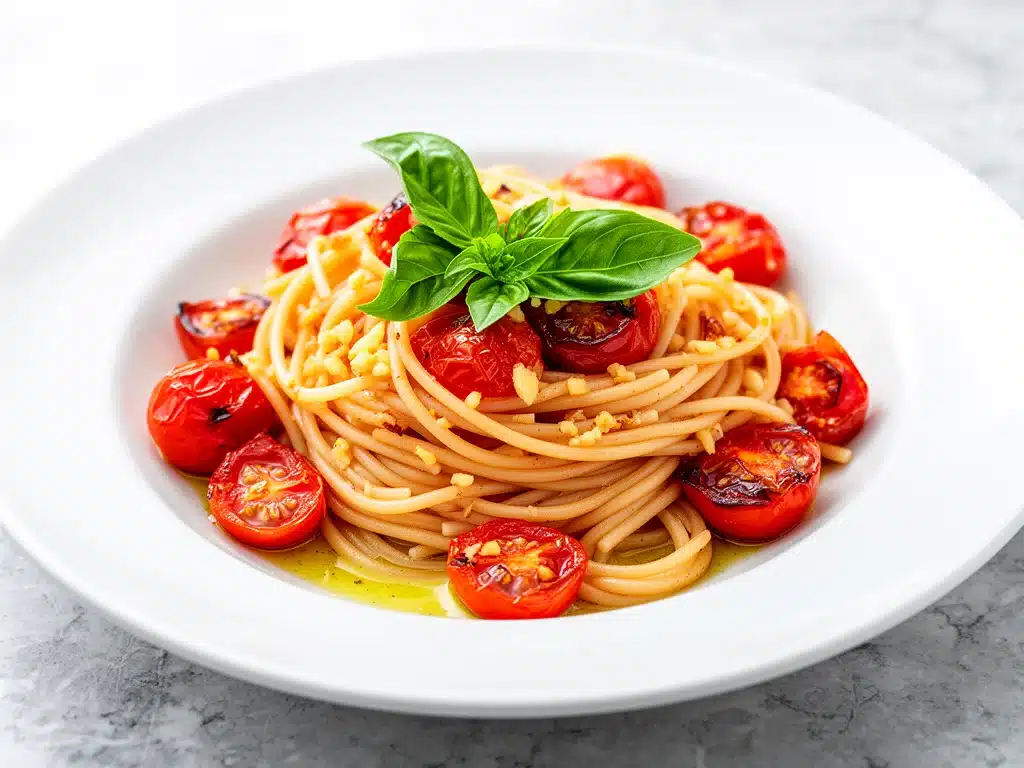
It was 7:15 PM on a Tuesday, and the rain was hammering against my kitchen window like it had a personal grudge against me. I was staring into the fridge, which was basically a sad assortment of wilting spinach, half a lemon, and a bag of cherry tomatoes that had been sitting there since Sunday. I was too tired to think. I was too broke to order Uber Eats. And I was definitely too exhausted to do any actual “cooking” that required chopping vegetables or managing multiple pots.
I wanted comfort food. I wanted something warm and satisfying, but I didn’t have the mental energy for it. So, I did what I always do when I hit that wall: I threw everything I had into a single sheet pan. I tossed the tomatoes with olive oil, salt, garlic, and a handful of dried basil. I threw a box of spaghetti in a pot of boiling water. And I waited.
When I pulled the pan out of the oven, the kitchen smelled like summer. The tomatoes had burst open, turning into this intense, concentrated jam of sweetness and acidity. When I tossed that sauce directly into the hot pasta, something magical happened. The starchy pasta water emulsified with the tomato juices and olive oil, creating a glossy, pinkish-orange sauce that clung to every single noodle. It tasted like a vacation. It tasted like I had spent three hours simmering a sauce on the stove, when in reality, I had spent exactly 20 minutes doing almost nothing active.
That night changed my weeknight routine. This Roasted Cherry Tomato Pasta has become my secret weapon for those “I have no energy but I still need to eat” nights. It’s the kind of dish that feels fancy enough for guests but easy enough for a Tuesday after work. The best part? It’s naturally vegetarian, incredibly cheap, and uses ingredients you probably already have in your fridge. If you’ve ever felt stuck in a dinner rut, trust me, this recipe will wake up your palate. I’ve made it at least fifteen times in the last three months, and it never gets old.
Why You’ll Love This Recipe
Look, I don’t have time for recipes that require ten steps and a shopping trip to a specialty store. This Roasted Cherry Tomato Pasta fits into my life because it respects my time and my pantry. Here’s why this dish has earned a permanent spot in my weekly rotation:
- One Pan Wonder — Seriously, one sheet pan for the tomatoes and one pot for the pasta. That’s it. No messy stovetop simmering, no scrubbing multiple pots. I hate doing dishes, so this is basically my love language. Cleanup takes about two minutes.
- 20 Minutes Flat — From the moment you turn on the oven to the moment you take the first bite, it’s twenty minutes. That includes boiling water, tossing tomatoes, roasting, and mixing. If you can boil water, you can make this. I’ve made this while helping my kids with homework. It works.
- Maximum Flavor, Minimum Effort — Roasting cherry tomatoes concentrates their flavor in a way that boiling never could. You get this deep, almost jammy sweetness that balances perfectly with the salty Parmesan. It tastes like you tried hard, but you really didn’t.
- Pantry Friendly — You likely have all of this already. Pasta, olive oil, garlic, cherry tomatoes, Parmesan. That’s it. No weird spices you’ll use once and forget. It’s reliable. It’s consistent. It just works.
- Leftovers That Actually Taste Good — Most pasta tastes sad the next day. Not this. The roasted tomato flavor actually gets better as it sits, soaking into the noodles. I deliberately make extra for lunch on Wednesday. It’s cold-friendly too, if you’re into that kind of thing (I’m not, but my roommate is).
This is my go-to when I need dinner to just work. No stress, no mess, just delicious food that makes everyone at the table happy. Even the picky eaters at my table, who usually claim they’re “not hungry,” come back for seconds when they smell the roasting tomatoes.
Ingredients You’ll Need
Here’s the best part: you probably have most of this already. This recipe relies on high-quality basics rather than complex ingredients. I’m particular about three things here, and I’ll tell you exactly why they matter.
For the Pasta Base
Spaghetti or Linguine (1 pound / 450g) — I usually reach for spaghetti because it’s what I have, but any long pasta works. Angel hair cooks too fast, and thick fettuccine might not coat the sauce as nicely. The key is finding a pasta that has enough surface area to hold onto that roasted tomato goodness. I stick with Barilla or De Cecco—they cook evenly and don’t get mushy.
Cherry or Grape Tomatoes (1 pint / about 300g) — Do not substitute large beefsteak tomatoes here. They have too much water and won’t roast properly. You want small, sweet, burstable tomatoes. If you can find heirloom cherry tomatoes in different colors, use them—they look pretty and taste sweeter. Just make sure they’re fresh and firm.
Good Olive Oil (3 tablespoons / 45ml) — This is the sauce base, so don’t use the cheapest stuff you have. You don’t need extra virgin for cooking, but don’t use something that tastes like cardboard either. A mid-range extra virgin olive oil works perfectly. It adds that fruity, peppery note that ties everything together.
For the Flavor Boost
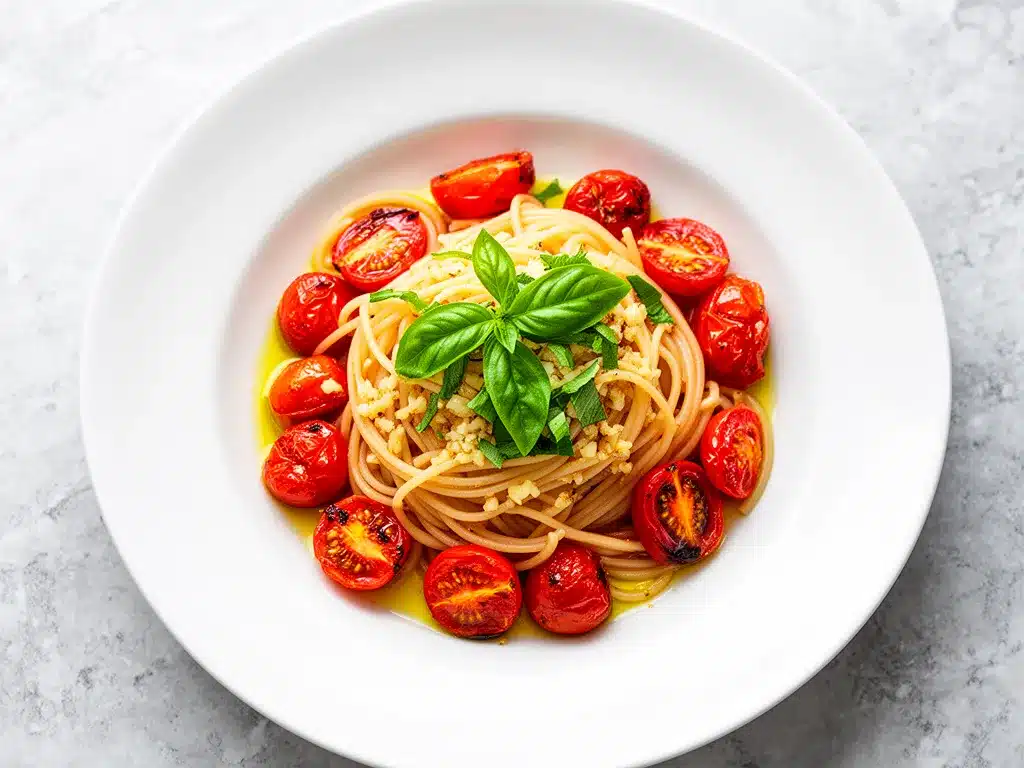
Garlic (4-5 cloves, minced / about 2 tablespoons) — Yes, five cloves. Don’t be shy. Roasting mellows the garlic, making it sweet and nutty, but you need enough punch to stand up to the tomatoes. Fresh garlic only. I know jarred garlic is convenient, but it has a metallic aftertaste that ruins the delicate balance here. Takes two minutes to mince by hand.
Dried Basil (1 teaspoon) — Fresh basil turns slimy when roasted, so dried is actually better here. It releases its oils in the heat. If you only have fresh, add it after you toss the pasta, not before roasting. I keep a jar of dried basil on my counter at all times. It’s a weeknight dinner staple.
Red Pepper Flakes (½ teaspoon) — Optional, but I recommend it. Just a pinch adds a subtle warmth that wakes up the dish without making it spicy. If you’re sensitive to heat, start with ¼ teaspoon.
The Finishers
Parmesan Cheese (½ cup / 50g, freshly grated) — Buy the block. Grate it yourself. Pre-grated cheese is coated in cellulose to prevent clumping, which means it doesn’t melt smoothly. It creates a grainy texture that feels cheap. Freshly grated Parmesan melts into the sauce and creates that creamy, salty finish. Worth the extra 90 seconds.
Salt and Black Pepper — Sea salt for the pasta water, and freshly cracked black pepper for finishing. Don’t skip the pepper. It adds a nice bite that contrasts with the sweet tomatoes.
Optional Add-Ins
Fresh Basil (¼ cup, torn) — Add this at the very end for color and brightness. It’s not necessary, but it makes the dish look restaurant-quality.
Mozzarella Balls (½ cup, halved) — If you want to make this feel like a meal, toss in some fresh mozzarella balls (bocconcini) during the last 5 minutes of roasting. They get gooey and melty. My kids love this version.
Protein — Grilled chicken strips, shrimp, or Italian sausage all work great. I usually add these if I’m hungry for more than just carbs. But honestly? The pasta is so satisfying on its own, I often skip the protein.
Equipment Needed
You don’t need fancy gadgets for this. Here’s what I actually use in my kitchen:
Sheet Pan (Large) — I use a standard 18×13 inch rimmed baking sheet. If yours is smaller, you might need to roast in two batches, or just give the tomatoes more space so they roast instead of steam. I have a well-loved, slightly scratched pan that’s been through hundreds of roasts. It doesn’t need to be new to work.
Large Pot — For boiling the pasta. I use a 6-quart pot. It needs to be big enough to let the pasta move around. If it’s too small, the water temperature drops too much, and your pasta turns to mush.
Colander — For draining the pasta. Or, if you’re feeling lazy like I often am, just use the lid to drain it (carefully!). I prefer the colander because it’s safer.
Sharp Knife — For mincing the garlic. Dull knives are dangerous and frustrating. Keep your knives sharp.
Peeling Board — I keep a small wooden board next to the stove for chopping. It saves my counter and makes cleanup easier. Not strictly necessary, but it’s my favorite little tool.
Grater — A box grater or microplane for the Parmesan. If you’re grating a lot of cheese, a food processor works, but for half a cup, hand-grating is faster.
Tongs — For tossing the pasta. Forks work, but tongs give you better control. I use a pair of silicone-tipped tongs so I don’t scratch my pots.
How to Make It: Step-by-Step
Alright, let’s make this! I’m walking you through exactly how I do it, including the little tricks I’ve picked up over the years. It’s simple, but there are a few details that make the difference between “okay” and “amazing.”
Step 1: Prep Your Oven and Pan (5 minutes)
Preheat your oven to 400°F (200°C). This is a high heat, which is crucial. We want the tomatoes to blister and burst, not just sit there and sweat. While the oven heats up, line your sheet pan with parchment paper. I do this for easy cleanup, but you can also just grease the pan with olive oil if you’re trying to reduce waste. I’m usually lazy, so parchment it is.
Step 2: Toss the Tomatoes (3 minutes)
Wash your cherry tomatoes and pat them dry. Wet tomatoes steam instead of roast. Dump them onto the sheet pan. Add the minced garlic, 2 tablespoons of olive oil, salt, pepper, and the dried basil. Toss everything with your hands or a spoon until the tomatoes are lightly coated. They should look glossy, not swimming in oil. Spread them out in a single layer. If they’re crowded, they’ll steam. Give them space to breathe.
Step 3: Roast the Tomatoes (15-18 minutes)
Put the pan in the oven. Roast for 15-18 minutes. You’re looking for tomatoes that are wrinkled, bursting, and slightly caramelized at the edges. Some might pop open completely, releasing their juices. That’s perfect. If they’re just soft but not browned, give them 2-3 more minutes. The smell filling your kitchen is your cue that they’re getting close.
Step 4: Boil the Pasta (8-10 minutes)
While the tomatoes roast, bring a large pot of salted water to a boil. The water should taste like the sea—use about 1 tablespoon of salt per pound of pasta. This is the only chance you have to season the pasta itself, so don’t skimp. Add the pasta and cook according to package directions until al dente. This usually takes 8-10 minutes for spaghetti. Stir occasionally to prevent sticking.
Step 5: Save the Pasta Water (Crucial Step!)
Before you drain the pasta, scoop out 1 cup of the starchy cooking water and set it aside. I know, it looks like dirty water, but this is liquid gold. The starch in the water helps create an emulsion with the olive oil and tomato juices, creating a sauce that clings to the pasta instead of sliding off. I set out a measuring cup before I even start cooking so I don’t forget. I’ve learned this the hard way.
Step 6: Combine and Toss (2 minutes)
Drain the pasta, but don’t rinse it! Rinsing washes away the starch you just worked hard to save. Immediately transfer the hot pasta to the sheet pan with the roasted tomatoes. Or, if your pan is too small, transfer everything to a large skillet or serving bowl. Add the remaining 1 tablespoon of olive oil. Toss everything together vigorously. The heat from the pasta will warm the tomatoes and help break them down into a sauce. If it looks dry, add a splash of that reserved pasta water. Keep tossing until the sauce is glossy and coats every noodle.
Step 7: Finish and Serve
Remove from heat. Sprinkle the freshly grated Parmesan over the top. Toss again so the cheese melts into the warm pasta. Taste and adjust salt if needed. The tomatoes are naturally sweet, so you might not need much extra salt, but always check. Serve immediately, topped with fresh basil if you have it, and a crack of black pepper. It’s simple, but it’s perfect.
Expert Tips & Tricks
Here’s everything I’ve learned from making this dozens of times. These tips will save you from my mistakes and help you get restaurant-quality results.
Don’t Crowd the Pan — This is the #1 mistake people make. If the tomatoes are touching each other, they steam. If they have space, they roast. Use a large pan, or roast in two batches. I’ve ruined batches by being lazy and overcrowding the pan. The tomatoes just get soggy. Give them room to breathe.
Roast Until They Burst — You want these tomatoes to break open. The juices they release are what create the sauce. If they’re still firm after 15 minutes, they’re not done. Roast until they look jammy and wrinkled. The edges should be slightly browned. That’s where the flavor is.
Use Starchy Water — I cannot stress this enough. That pasta water is the secret ingredient. It binds the oil and tomato juices into a creamy sauce without adding any cream. It’s magic. Save at least ½ cup, preferably 1 cup.
Grate Your Own Cheese — Pre-grated Parmesan has anti-caking agents that prevent it from melting smoothly. It creates a grainy, clumpy texture. Grate a block of Parmesan before you start. It takes 2 minutes and makes a huge difference in the final texture.
Season in Layers — Season the pasta water, season the tomatoes, and taste at the end. Don’t just dump salt on at the end. Layering the seasoning ensures every bite is flavorful. The tomatoes need salt to bring out their sweetness. The pasta needs salt to taste like anything at all.
Add a Pinch of Sugar — If your tomatoes aren’t very ripe or sweet, add ½ teaspoon of sugar to the pan before roasting. It balances the acidity. I usually don’t need to, but in winter, when tomatoes are less sweet, it helps.
Variations & Substitutions
Once you’ve nailed the basic version, here’s how you can mix it up. I’ve tried all of these, and they’re all delicious in their own way.
Protein-Packed Version — Add 2 cups of grilled chicken strips or cooked shrimp to the pan during the last 5 minutes of roasting. The shrimp gets nice and charred, and the chicken soaks up the tomato flavor. This makes it a more filling meal for hungry nights.
White Bean Boost — Stir in one can of drained and rinsed cannellini beans during the tossing step. They add creaminess and protein, and they hold the sauce beautifully. This is a great vegetarian way to make the dish more substantial. It’s cheap, too.
Sausage & Tomato — Brown some Italian sausage in a skillet before roasting the tomatoes. Crumble it up and toss it in at the end. The fennel and spices in the sausage pair perfectly with the sweet tomatoes. This is my husband’s favorite version.
Spicy Arrabbiata Style — Add 1 teaspoon of red pepper flakes to the pan, and maybe a splash of hot sauce after tossing. If you like heat, this turns the dish into a spicy, robust meal. Serve with crusty bread to soak up the sauce.
Pesto Swirl — Stir in 2 tablespoons of basil pesto after tossing with the tomatoes. It adds a fresh, herbal brightness that cuts through the richness. It’s like getting the best of both worlds—roasted depth and fresh aroma.
Gluten-Free — Use your favorite gluten-free pasta. The method is exactly the same. I’ve tested this with Barilla and Ronzoni gluten-free spaghetti, and both work well. Just be careful not to overcook GF pasta, as it can get mushy faster.
Dairy-Free — Skip the Parmesan or use a nutritional yeast sprinkle for a cheesy flavor without dairy. Use olive oil instead of butter (there is no butter in this recipe anyway, so you’re good). The tomatoes provide enough richness on their own.
Serving & Storage
How to Serve — I usually serve this straight from the skillet or pan at the dinner table. It looks rustic and stays warm. But here are other ways I’ve enjoyed it:
- Garlic Bread — Obviously. You need something to soak up that sauce. I make a quick garlic toast with baguette and butter.
- Green Salad — A simple arugula salad with lemon vinaigrette cuts through the richness of the pasta. The peppery greens go great with the sweet tomatoes.
- Roasted Vegetables — If you want more veggies, roast some zucchini or asparagus on a separate sheet pan at the same time. One oven, two pans. Efficient.
Toppings Bar — When I have guests, I put out: extra Parmesan, red pepper flakes, fresh basil, lemon wedges, and crispy bacon bits. Everyone customizes their bowl. It’s fun and interactive.
Storage — Store leftovers in an airtight container in the fridge for up to 4 days. The sauce will thicken in the fridge—totally normal. The tomatoes continue to release juices, and the pasta absorbs them.
Reheating — Best method: Add to a skillet with a splash of water or milk over low heat. Stir until heated through and creamy again. The liquid brings back the sauce texture. Microwave method: Heat in 30-second intervals, stirring between. Add a splash of water if it’s too thick. Never works: Trying to reheat in the pot you cooked it in. It always burns on the bottom. Ask me how I know.
Freezing — Honestly, this doesn’t freeze well. The texture of the tomatoes changes, and the pasta can get mushy. Make it fresh or store in the fridge for up to 4 days. I rarely have leftovers, but if I do, I eat them within 2 days.
Nutrition Information
I’m not a nutritionist, but here’s the breakdown if you’re tracking. This is based on 6 servings.
| Nutrient | Per Serving |
|---|---|
| Calories | 380 |
| Protein | 12g |
| Carbs | 52g |
| Fiber | 3g |
| Sugar | 6g |
| Fat | 14g |
| Saturated Fat | 4g |
| Sodium | 420mg |
What’s Good: Decent protein from the pasta and Parmesan. Fiber from the tomatoes. It’s a balanced meal if you add veggies or protein. What to Know: Higher in carbs from the pasta. Contains dairy and gluten. Moderate sodium (use low-sodium broth if you add sausage). My Take: This is comfort food. It’s not a diet recipe, but it’s way better than takeout. When I want to make it lighter, I use half the pasta and double the tomatoes. But usually? I just eat a reasonable portion and enjoy it.
Final Thoughts
So that’s my go-to Roasted Cherry Tomato Pasta! I’ve probably talked your ear off at this point, but when you make a recipe this often, you have a lot to say about it. This has saved weeknight dinners more times than I can count. It’s my answer to “what’s for dinner” when I’m tired, don’t want takeout, and still want something that tastes really good. My kids are happy, my husband’s happy, and I’m happy because I’m not stressed about cooking.
Make it yours! Try different add-ins, swap in your favorite vegetables, adjust the garlic (though more is always better in my opinion). The best recipes are the ones you adapt to your family’s tastes. If you make this, drop a comment and let me know what you think! I love hearing how recipes turn out in your kitchen. And if something doesn’t work, tell me that too—I’m here to help troubleshoot. Happy cooking! And I hope your kitchen smells half as good as mine does right now.
Frequently Asked Questions
Can I use canned tomatoes instead of fresh?
You can, but the texture and flavor will be different. Canned tomatoes are already cooked and soft, so they won’t roast and caramelize. If you use canned, skip the roasting step and just simmer them in the pan with garlic and olive oil for 10 minutes. It’s still good, but it won’t have that roasted depth. Fresh cherry tomatoes are key for this specific recipe.
Why did my sauce turn out watery?
Usually, this means you didn’t roast the tomatoes long enough, or you added too much pasta water. Roast until the tomatoes are burst and jammy. Also, add the pasta water gradually. You don’t need all of it. Toss the pasta first, then add a splash if it looks dry. The tomatoes should release enough juice on their own.
Can I make this ahead for a dinner party?
Sort of. You can roast the tomatoes up to 2 days ahead and store them in the fridge. Cook the pasta fresh right before serving (takes 10 minutes). Reheat the tomatoes gently, toss with hot pasta, and serve. It won’t be quite as good as fresh, but it’s close and saves you stress during the party. I do this all the time for guests.
Can I use whole wheat pasta?
Absolutely. Whole wheat pasta has a nuttier flavor that pairs well with the sweet tomatoes. Just be careful not to overcook it, as it can get mushy faster than white pasta. Cook it al dente, maybe a minute less than the package says.
How do I reheat leftovers without it getting dry?
Add a splash of water or milk to a skillet, add your leftover pasta, and heat gently over low heat, stirring frequently. The extra liquid brings back the creamy texture. Microwave sort of works but tends to dry it out. If you do microwave, definitely add a splash of water first and heat in short bursts, stirring between.
Can I double this recipe?
Absolutely! Double everything and use two sheet pans. The cooking times stay the same. I do this when I’m meal-prepping or feeding a crowd. Just make sure your oven has enough space for two pans. If not, roast in batches.
Pin This Recipe!
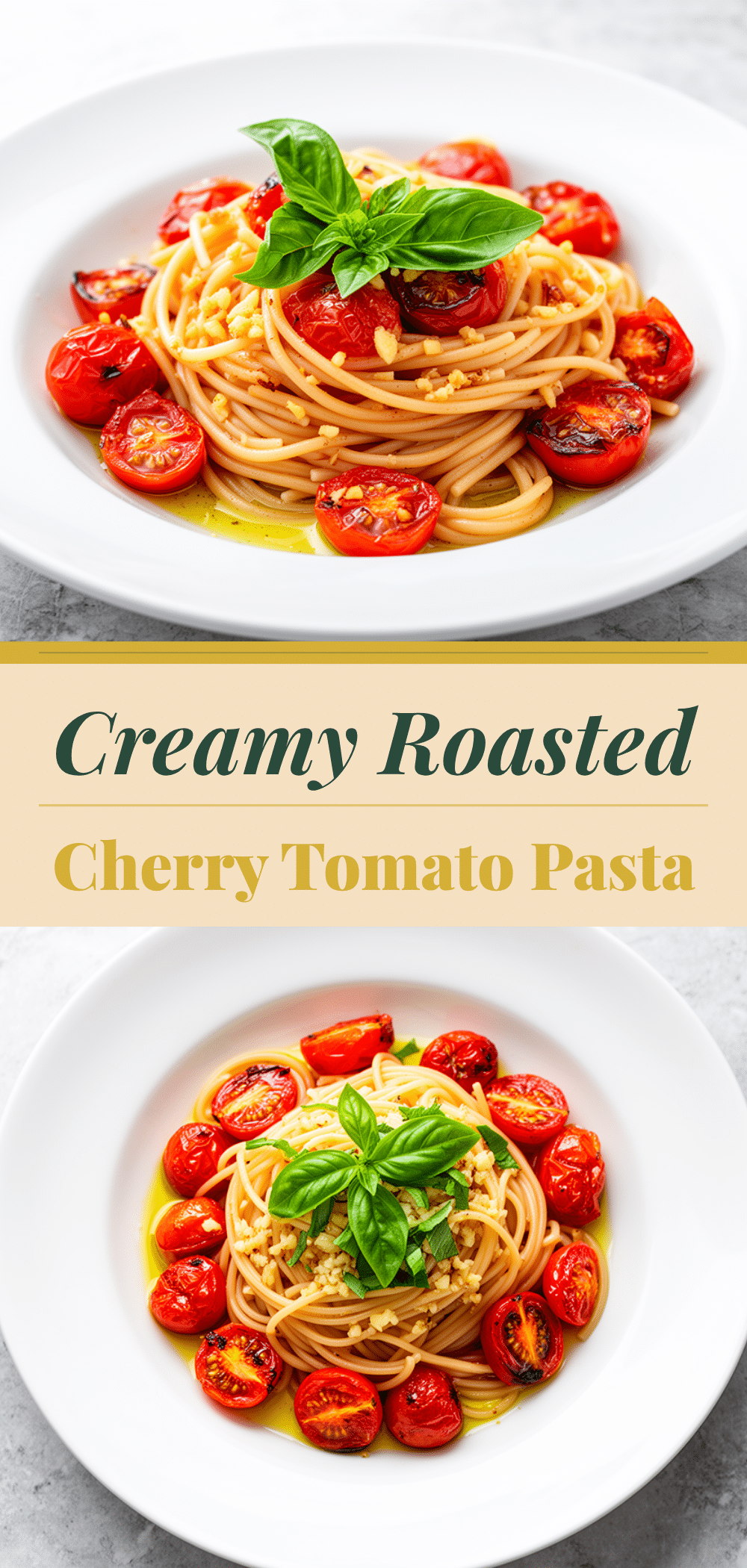
Roasted Cherry Tomato Pasta
- Total Time: 20 minutes
- Yield: 6 servings 1x
Description
A quick, 20-minute weeknight dinner featuring roasted cherry tomatoes tossed with spaghetti, garlic, and Parmesan. This one-pan wonder creates a glossy, emulsified sauce using starchy pasta water for maximum flavor with minimal effort.
Ingredients
- 1 pound (450g) Spaghetti or Linguine
- 1 pint (about 300g) Cherry or Grape Tomatoes
- 3 tablespoons Good Olive Oil
- 4–5 cloves Garlic, minced
- 1 teaspoon Dried Basil
- 1/2 teaspoon Red Pepper Flakes (optional)
- 1/2 cup (50g) Parmesan Cheese, freshly grated
- Salt and Black Pepper to taste
- 1 cup Reserved Pasta Water
Instructions
- Preheat oven to 400°F (200°C). Line a large sheet pan with parchment paper or grease with olive oil.
- Wash and dry cherry tomatoes. Place them on the sheet pan with minced garlic, 2 tablespoons olive oil, salt, pepper, and dried basil. Toss to coat evenly and spread in a single layer.
- Roast tomatoes for 15-18 minutes until wrinkled, bursting, and slightly caramelized at the edges.
- While tomatoes roast, bring a large pot of salted water to a boil. Add pasta and cook according to package directions until al dente (8-10 minutes).
- Before draining, reserve 1 cup of starchy pasta water.
- Drain pasta (do not rinse) and immediately transfer to the sheet pan with roasted tomatoes.
- Add remaining 1 tablespoon olive oil and toss vigorously. The heat from the pasta will help break down tomatoes into a sauce. Add reserved pasta water as needed to create a glossy emulsion.
- Remove from heat, sprinkle with freshly grated Parmesan, and toss until melted. Taste and adjust seasoning. Serve immediately with fresh basil and black pepper if desired.
Notes
Do not crowd the pan with tomatoes; they need space to roast rather than steam. Use freshly grated Parmesan for better melting. Save starchy pasta water to emulsify the sauce. This dish does not freeze well due to texture changes in tomatoes and pasta.
- Prep Time: 8 minutes
- Cook Time: 12 minutes
- Category: Main Course
- Cuisine: Italian
Nutrition
- Serving Size: 1 serving
- Calories: 380
- Sugar: 6
- Sodium: 420
- Fat: 14
- Saturated Fat: 4
- Carbohydrates: 52
- Fiber: 3
- Protein: 12
Keywords: roasted cherry tomato pasta, weeknight dinner, easy pasta recipe, vegetarian pasta, one pan meal, 20 minute dinner, Italian comfort food


